
Venn Diagrams
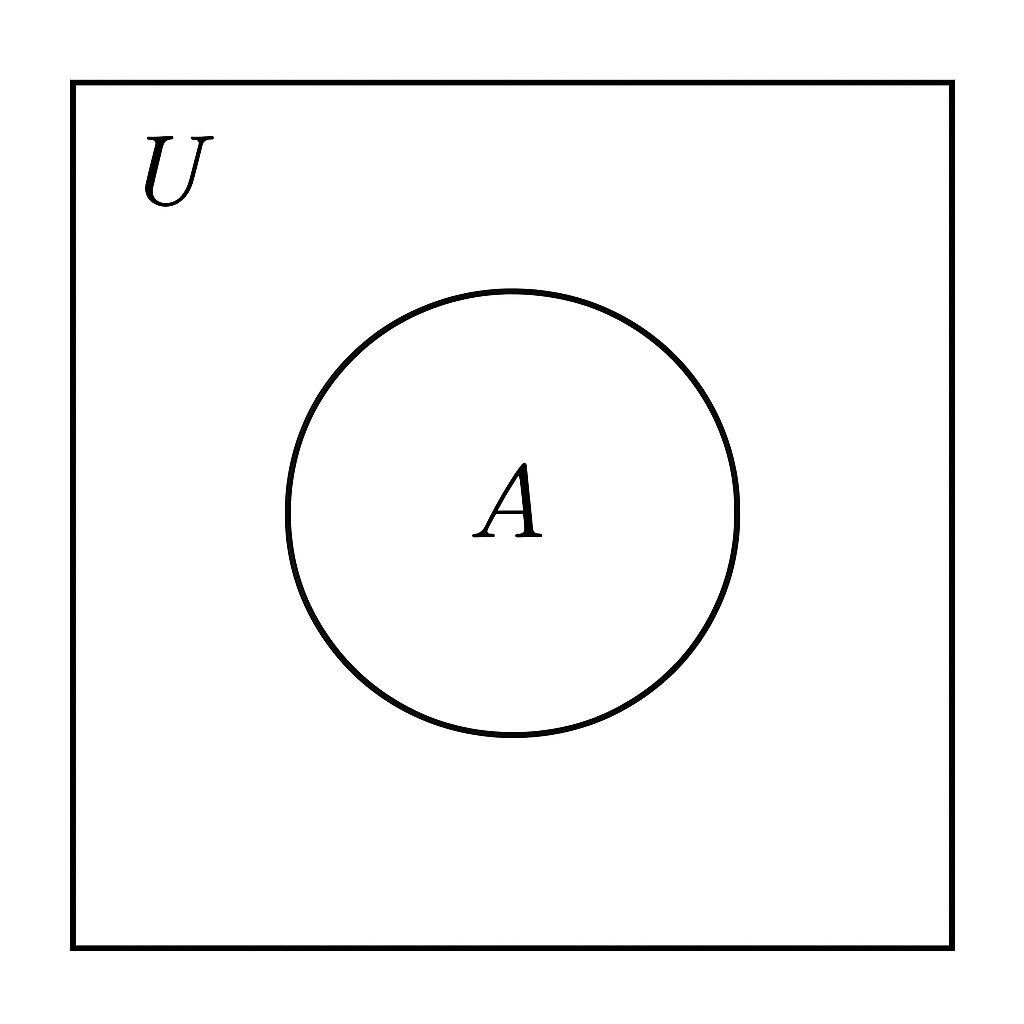
Venn diagrams are visual tools used to represent relationships between sets. The universal set (U) is typically represented by a rectangle, and its subsets are represented by closed curves, usually circles.
Operations on Sets
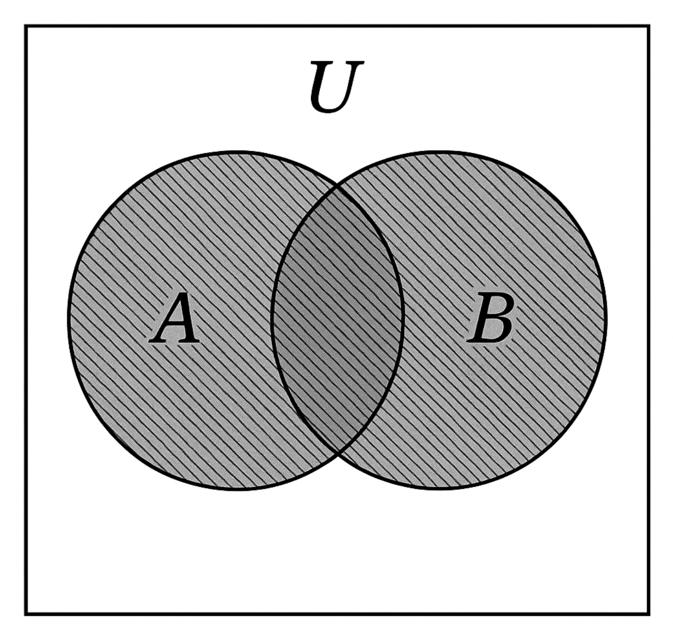
1. Union of Sets () The union of two sets A and B is the set of all elements that are in set A, or in set B, or in both. Common elements are taken only once.
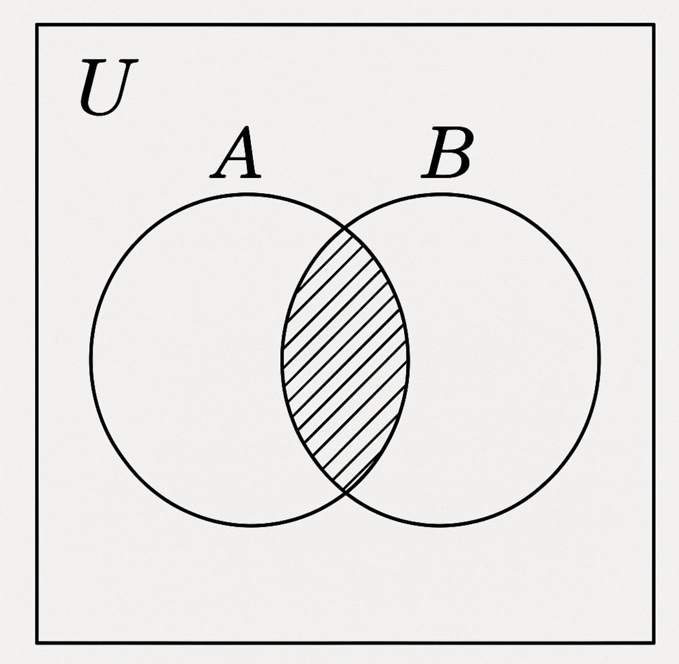
2. Intersection of Sets () The intersection of two sets A and B is the set of all elements which are common to both A and B.
- Disjoint Sets: If two sets have no elements in common (), they are called disjoint sets.
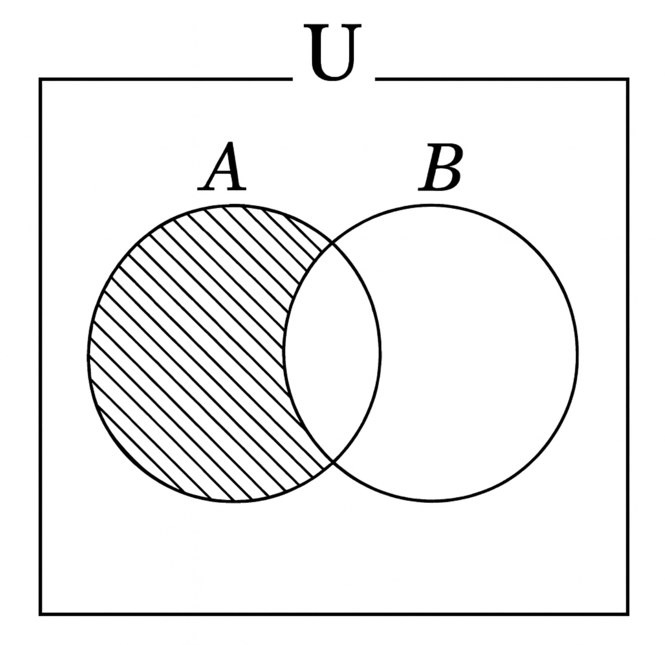
3. Difference of Sets (-) The difference of sets A and B (in that order) is the set of elements which belong to A but not to B.
- Note that in general, .
4. Complement of a Set (') Let U be the universal set. The complement of a set A, denoted by , is the set of all elements of U which are not in A.
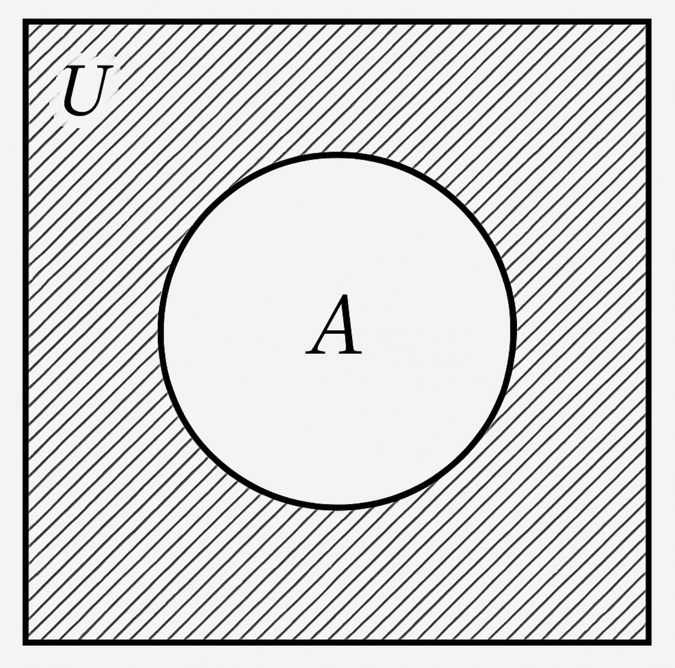
Properties & Laws of Set Operations
- Commutative Law: ;
- Associative Law: ;
- Distributive Law:
- De Morgan's Laws: These are crucial for logic and set theory.
Example 1: Union and Intersection
Question: Let and . Find and .
Solution:
- Union: We list all unique elements from both sets.
- Intersection: We list only the elements that are common to both sets.
Example 2: Difference and Complement
Question: Let , , and . Find , , and .
Solution:
- Difference (A - B): Elements in A but not in B.
- Difference (B - A): Elements in B but not in A.
- Complement (A'): Elements in U but not in A.