
Detailed Solutions: CBSE Class 10 Social Science Sample Paper 2027 – Set 2
Every written question from the paper (2, 3, 4 and 5 marks) is solved here in order, with the marks given for each step, so you can check your answer sheet the way an examiner would. Where a question has an internal choice (OR), both options are solved. The 1-mark questions are answered, with explanations, in the quiz on the Question Paper page.
Section A - History (20 marks)
Question 5 (2 marks)
'The sixteenth century was a turning point for the pre-modern world.' Justify the statement with two points.
Answer.
Model answer:
First, European sailors reached Asia by sea and entered the Indian Ocean trade, turning part of it towards Europe. Second, they reached long-isolated America, whose crops, like the potato, and silver began changing lives everywhere.
Marking scheme:
- European sailors found a sea route to Asia and entered the busy Indian Ocean trade, in which the Indian subcontinent was a central point; they expanded some of its flows and turned some of them towards Europe — 1 mark
- They also crossed the ocean to America, which had been cut off from regular contact for millions of years; its vast lands, crops (potato, maize) and minerals (silver) began to change trade and lives everywhere (accept: Portugal and Spain had conquered large parts of America by the mid-sixteenth century) — 1 mark
Question 6 (3 marks)
Explain how the knowledge of printing reached Europe, and how books were produced there before Gutenberg's press came into use. Give three points.
Answer.
Model answer:
First, Marco Polo brought woodblock printing from China to Italy in 1295, and it spread across Europe. Second, costly editions were still hand-written on vellum for aristocrats and monasteries, while merchants and students bought cheaper printed copies. Third, booksellers hired many scribes, but hand-copying could not meet the growing demand.
Marking scheme:
- The craft came from China: after years in China, Marco Polo returned to Italy in 1295 with the knowledge of woodblock printing; Italians began to print books with woodblocks and the method soon spread to other parts of Europe (accept: paper had reached Europe along the silk route in the eleventh century) — 1 mark
- Books were made for two kinds of buyers: costly editions were still written by hand on vellum for aristocrats and rich monastery libraries, while merchants and university students bought the cheaper printed copies — 1 mark
- As demand grew, booksellers exported books to many countries and employed many scribes (often more than 50 for one bookseller) to copy manuscripts, but hand-copying could not keep up; by the early fifteenth century woodblocks were widely used to print textiles, playing cards and religious pictures with short texts (any one; any other relevant point) — 1 mark
OR
Explain three ways in which the printing press changed the making and spread of books in Europe in the hundred years after 1450.
Answer.
Model answer:
First, books were now printed mechanically, far faster and in far larger numbers than by hand: the print revolution. Second, German-trained printers set up presses abroad, and about 20 million printed copies were on the market by 1500. Third, books became cheaper and reached many more readers, so new ideas spread widely.
Marking scheme:
- Books could now be made mechanically, far faster and in far larger numbers than by hand; this shift from hand-copying to mechanical printing is called the print revolution — 1 mark
- Printing spread quickly: printers trained in Germany moved to other lands and set up presses, so within about a hundred years most countries of Europe had presses; by the end of the fifteenth century about 20 million copies of printed books were on the market — 1 mark
- Books became cheaper and reached a wider circle of readers, not only the rich and the Church, so new ideas could spread widely (any other relevant point, e.g. a new reading public; debates that worried the Church) — 1 mark
Question 7 (5 marks)
Examine how the French Revolution and Napoleon's conquests first carried the idea of the nation across Europe, and then stirred up national feeling against French rule.
Answer.
Model answer:
Spreading the idea. Students and educated middle-class people set up Jacobin clubs in many European towns, and French armies carried nationalism abroad. Where Napoleon ruled, he simplified administration, ended feudalism, freed peasants from serfdom and dues, and removed guild restrictions. With the same laws, weights and measures and currency over a large area, the French were first welcomed as liberators.
Turning against France. With no political freedom, and with higher taxes, censorship and forced conscription, the welcome turned to hostility. Resistance sharpened national feeling: in the German lands, for example, the Grimm brothers worked to protect German language and folk culture from French domination.
Marking scheme:
- Students and other educated middle-class people set up Jacobin clubs in many European towns, and in the 1790s French armies carried the idea of nationalism abroad (accept: the measures that built a sense of the nation inside France, such as la patrie and le citoyen, the tricolour, the National Assembly, uniform laws and one language) — 1 mark
- In the Dutch Republic, Switzerland, Italy and the German lands, Napoleon simplified administration, ended the feudal system, freed peasants from serfdom and manorial dues, and removed guild restrictions — 1 mark
- At first many people welcomed the French armies as bringers of liberty, since the new laws, weights and measures and currency were the same across a large area (any other relevant point) — 1 mark
- The welcome soon turned to hostility: the new administration brought no political freedom, and people faced higher taxes, censorship and forced conscription into the French armies — 1 mark
- Resistance to French rule sharpened national feeling, for example through efforts to protect a people's own language and folk culture from French domination, as the Grimm brothers did in the German lands (any other relevant point) — 1 mark
OR
After 1815, the rulers of Europe tried to crush every demand for liberty and national unity. Examine how liberal-nationalists and revolutionaries such as Giuseppe Mazzini kept their cause alive in these years.
Answer.
Model answer:
With open protest dangerous, many liberal-nationalists went underground. Secret societies in many states trained revolutionaries and spread ideas. Being a revolutionary meant opposing the monarchies restored after 1815 and fighting for liberty, with nation-states as part of that goal.
Mazzini, a member of the Carbonari, was exiled in 1831 after a failed rising in Liguria. He then founded Young Italy in Marseilles and Young Europe in Berne, arguing that nations were natural units, so Italy must become one republic. Secret societies elsewhere copied him, and Metternich called him the most dangerous enemy of the social order.
Marking scheme:
- Fear of arrest drove many liberal-nationalists underground: secret societies grew up in many European states to train revolutionaries and spread their ideas — 1 mark
- To be a revolutionary meant opposing the monarchies set up after 1815 and fighting for liberty; these revolutionaries saw the creation of nation-states as a necessary part of that fight — 1 mark
- Mazzini, born in Genoa in 1807, joined the secret society of the Carbonari; after a failed attempt at revolution in Liguria he was sent into exile in 1831 — 1 mark
- In exile he founded Young Italy in Marseilles and Young Europe in Berne, whose members came from Poland, France, Italy and the German states; he held that nations were the natural units of mankind, so Italy should become one unified republic — 1 mark
- His example led to secret societies in Germany, France, Switzerland and Poland, and conservatives feared him: Metternich called him the most dangerous enemy of the social order (accept: the uprisings of 1831 and 1848 failed, yet they kept the idea of unity alive; any other relevant point) — 1 mark
Question 8 (4 marks)
Read the source given below and answer the questions that follow.
A Teacher's Notebook, March 1930
(An imagined account of a village on the road to the sea, written for this question)
The whole village was awake before dawn. Word had come that Gandhiji and his marchers would pass along our road today. They set out from Sabarmati more than a week ago, and they still have many days of walking before they reach the sea.
When they came, I counted fewer than a hundred walkers, most of them young, each with a small cloth bag. Gandhiji spoke for a few minutes under the banyan tree. He did not talk about councils or constitutions. He talked about salt: the poorest labourer and the richest merchant both need it in every meal, yet the government taxes it and does not let us make it ourselves. The old women nodded as if he had named their own complaint.
The newspapers say that he had first written to the Viceroy with a long list of demands, some for mill-owners, some for peasants and some for everyone, and that the Viceroy would not negotiate.
Among those who listened were the biggest landowner of our village and a mill-owner from the town, men who had kept away from the Congress ten years ago.
8.1 Why did Gandhiji speak to the villagers about salt rather than about councils or constitutions? (1 mark)
Answer.
Model answer:
Everyone, rich or poor, needed salt, so the tax on it and the ban on making it touched every home and showed British rule's harshness plainly.
Marking scheme:
- Salt was needed by rich and poor alike, so the tax on it and the ban on making it touched everyone and showed the harsh face of British rule in a way all could understand — 1 mark
8.2 Why might Gandhiji have included demands for mill-owners as well as for peasants in his letter to the Viceroy? (1 mark)
Answer.
Model answer:
So that every class could find its own grievances in the list and join one united campaign.
Marking scheme:
- So that people of all classes could see their own grievances in the list and come together in one united campaign — 1 mark
8.3 The landowner and the mill-owner had kept away from the Congress ten years earlier. Explain two ways in which the movement that began with this march differed from the Non-Cooperation Movement, in its aims or in the groups that took part. (2 marks)
Answer.
Model answer:
First, this movement came after the Congress made Purna Swaraj its goal, and it asked people to break colonial laws, not just to refuse cooperation. Second, rich peasants such as the Patidars and Jats joined it actively, and women took part in large numbers.
Marking scheme:
- Any one difference in aim, e.g. it was launched after the Congress had adopted Purna Swaraj (complete independence) as its goal in 1929; or people were asked not only to refuse cooperation but to break colonial laws — 1 mark
- Any one difference in the groups taking part, e.g. rich peasant communities such as the Patidars of Gujarat and the Jats of Uttar Pradesh became active supporters; Indian industrialists backed the movement; women joined in large numbers; Muslim participation was much smaller than in 1921 (any other valid difference) — 1 mark
Question 9 (2 marks)
On the outline map of India given below, two places are shown as A and B. Use the clues to identify each place and write its name.
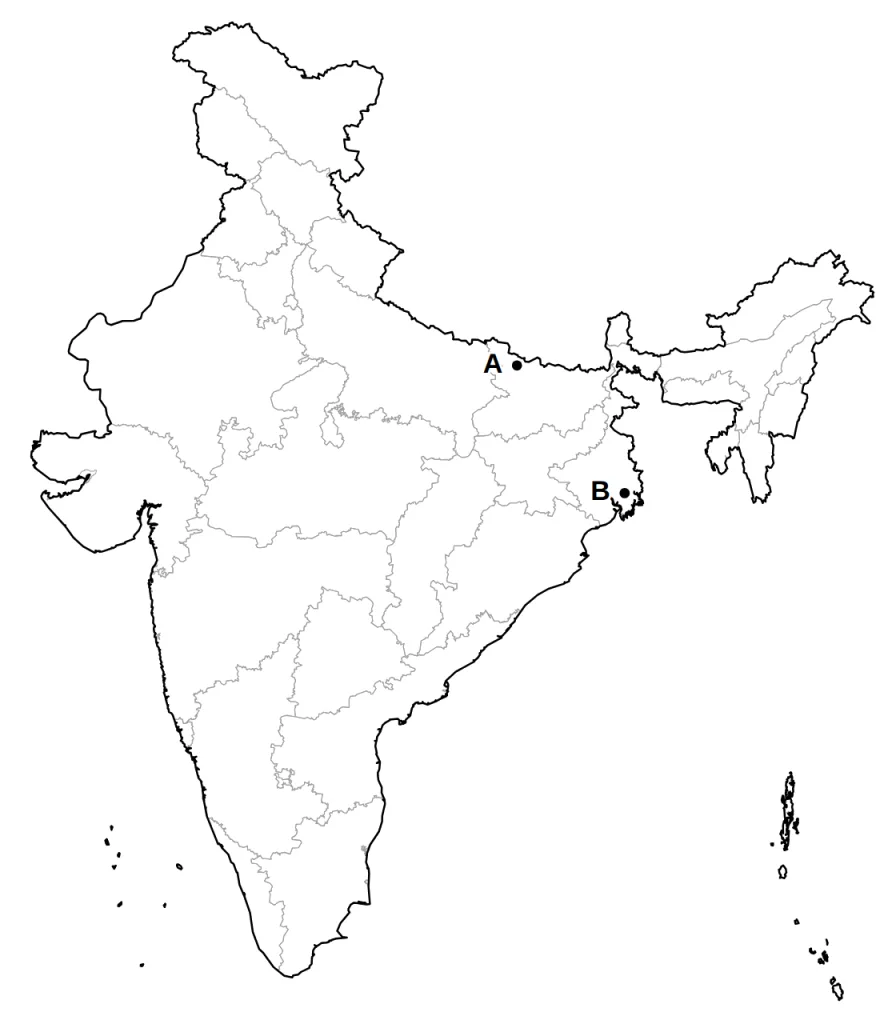
A The place in Bihar where peasants complained that European planters forced them to grow indigo on their land, and where Gandhiji went to take up their cause. (1 mark)
Answer.
- A: Champaran (Bihar) — 1 mark
B The city whose special Congress session of September 1920 first backed Gandhiji's plan to join the Khilafat issue with the demand for swaraj through non-cooperation. (1 mark)
Answer.
- B: Calcutta, now Kolkata (West Bengal) — 1 mark
Section B - Geography (20 marks)
Question 16 (2 marks)
Harish farms a small plot of sandy land in a dry district of north Gujarat. The rains are short and uncertain, and he has no means of irrigation. Suggest one millet and one pulse that he could grow, giving a reason for each.
Answer.
Model answer:
Bajra: it grows well on sandy soil with little water, and Gujarat is a major producer. Moth or moong: pulses need little moisture, and being leguminous they fix nitrogen and keep the soil fertile.
Marking scheme:
- Millet: bajra, which does well on sandy and shallow black soils with little water; Gujarat is one of the main bajra-growing states (accept any millet suited to dry land, e.g. jowar or ragi, with a valid reason) — 1 mark
- Pulse: any pulse suited to dry sandy land (e.g. moth, moong, urad or gram), because pulses need little moisture and survive dry spells; as leguminous crops they also fix nitrogen and keep the soil fertile — 1 mark
Question 17 (5 marks)
The government of an imaginary State in north India plans a new power station next to a large, crowded city. The city is far from both the coalfields and the gas fields. The planners must choose between coal and natural gas as the fuel.
(a) Compare coal and natural gas as the fuel for this power station on any three points. (3 marks)
Answer.
Model answer:
First, coal is bulky and must come a long way by rail, while gas can be piped through the Hazira-Vijaipur-Jagdishpur pipeline. Second, India has large coal reserves in the Damodar valley, but far less gas, from the Krishna-Godavari basin and Mumbai High. Third, gas is also needed for fertilisers and CNG, so the plant would compete with them.
Marking scheme:
- Any three points of comparison, 1 mark each. Reaching the plant: coal is bulky and has to be hauled a long way by rail; gas can be piped, for example through the Hazira-Vijaipur-Jagdishpur cross-country pipeline that links the west-coast fields with northern India — 1 mark
- How much India has: India has large coal reserves, mainly in the Gondwana coalfields of the Damodar valley (Jharia, Raniganj, Bokaro); its gas deposits (Krishna-Godavari basin, Mumbai High, Gulf of Khambhat) are much smaller, so a steady supply of gas is less certain — 1 mark
- Other claims on the fuel: natural gas is also needed as a raw material by fertiliser plants and as CNG for vehicles, so a power station would compete with them; coal already fuels most thermal power (accept: effect on the city's air, since coal gives off smoke, ash and more carbon dioxide; any other relevant point) — 1 mark
(b) Which fuel would you recommend for this power station? Support your choice with two reasons. (2 marks)
Answer.
Model answer:
Natural gas. The plant is next to a crowded city, and gas burns with far less smoke and ash than coal. Also, piping the gas saves hauling bulky coal across the country.
Marking scheme:
- A clear choice with a first valid reason, e.g. gas: the plant stands next to a crowded city, and gas burns with little smoke or ash; or coal: India's large reserves make its supply more secure — 1 mark
- A second valid reason for the same choice, e.g. gas: a pipeline saves hauling bulky coal across the country and leaves no ash to dispose of; or coal: the limited gas is better kept for fertilisers and CNG (either choice earns full marks if the reasons are sound) — 1 mark
OR
An old iron ore mine in a hill district has to dig deeper every year; the ore it now gets is poorer, and each tonne costs more to produce. Answer the following.
(a) Using this example, explain three reasons why minerals need to be conserved. (3 marks)
Answer.
Model answer:
First, minerals take millions of years to form, so they are replaced far more slowly than we use them. Second, as mining continues, ore must come from greater depths and is poorer, so costs rise, as this mine shows. Third, industry and farming depend on minerals, yet workable deposits are only about one per cent of the earth's crust.
Marking scheme:
- Minerals form over millions of years, so they are replaced far more slowly than we use them; they are finite and non-renewable — 1 mark
- As mining goes on, ore has to be taken from greater depths and is of poorer quality, so costs keep rising, as at this mine — 1 mark
- Industry and agriculture depend heavily on minerals, yet the deposits that can be worked form only a tiny part (about one per cent) of the earth's crust (any other relevant point) — 1 mark
(b) Suggest two ways in which minerals can be conserved. (2 marks)
Answer.
Model answer:
First, use minerals in a planned way, with better technology that makes low-grade ores usable cheaply. Second, recycle metals and reuse scrap metal.
Marking scheme:
- Any two of the following, 1 mark each: planned and sustainable use of minerals; better technology that allows low-grade ores to be used at low cost; recycling of metals; reuse of scrap metal; use of substitutes — 2 marks
Question 18 (4 marks)
Read the source given below and answer the questions that follow.
A Town With Two Kinds of Morning
(A report from an imaginary town, written for this question)
Sonpur stands on the bank of a wide river and gets good rain every monsoon. The town's water works says that it pumps enough water each day for every resident. Yet mornings in Sonpur look very different from ward to ward.
In the new colonies near the highway, overhead tanks fill up from the pipeline every day, and many houses water their lawns. In the old market wards, the taps run for one hour at dawn, and families fill every bucket and drum before the supply stops.
In Ward 9, a settlement of brick-kiln workers at the edge of the town, there is no pipeline at all. Women and girls queue at a single handpump. Its water tastes of salt and leaves a yellow stain on cooking pots, so the families who can afford it buy drinking water from a tanker that comes twice a week.
18.1 What kind of water scarcity do the families of Ward 9 face at the handpump? (1 mark)
Answer.
Model answer:
Scarcity due to poor quality: there is water, but it is salty and unfit to drink.
Marking scheme:
- Scarcity due to poor water quality: water is available, but it is salty and stained, so it is unfit to drink — 1 mark
18.2 The water works says that it pumps enough water for every resident. Explain two reasons why Ward 9 still faces water scarcity. (2 marks)
Answer.
Model answer:
First, access is unequal: the pipeline serves the richer colonies daily, but Ward 9 has no connection, so its scarcity comes from how water is shared. Second, some homes use far more than they need, while the poor spend time queuing and money on tankers for safe water.
Marking scheme:
- Access is unequal: the pipeline reaches the richer colonies every day, but the poorest settlement has no connection at all, so scarcity comes from how water is shared, not from how much there is — 1 mark
- Some households use much more than they need (full tanks, watered lawns), while the poor must spend time queuing and money on tankers for safe water; unequal access among social groups is itself a cause of water scarcity (any other relevant point) — 1 mark
18.3 Suggest one step the town could take to ease the water scarcity in Ward 9. (1 mark)
Answer.
Model answer:
Extend the pipeline to Ward 9 or set up public taps there.
Marking scheme:
- Any one: extend the pipeline or set up public taps in Ward 9; test and treat the handpump water; build a rainwater harvesting tank for the settlement; limit wasteful uses such as watering lawns (any other relevant step) — 1 mark
Question 19 (3 marks)
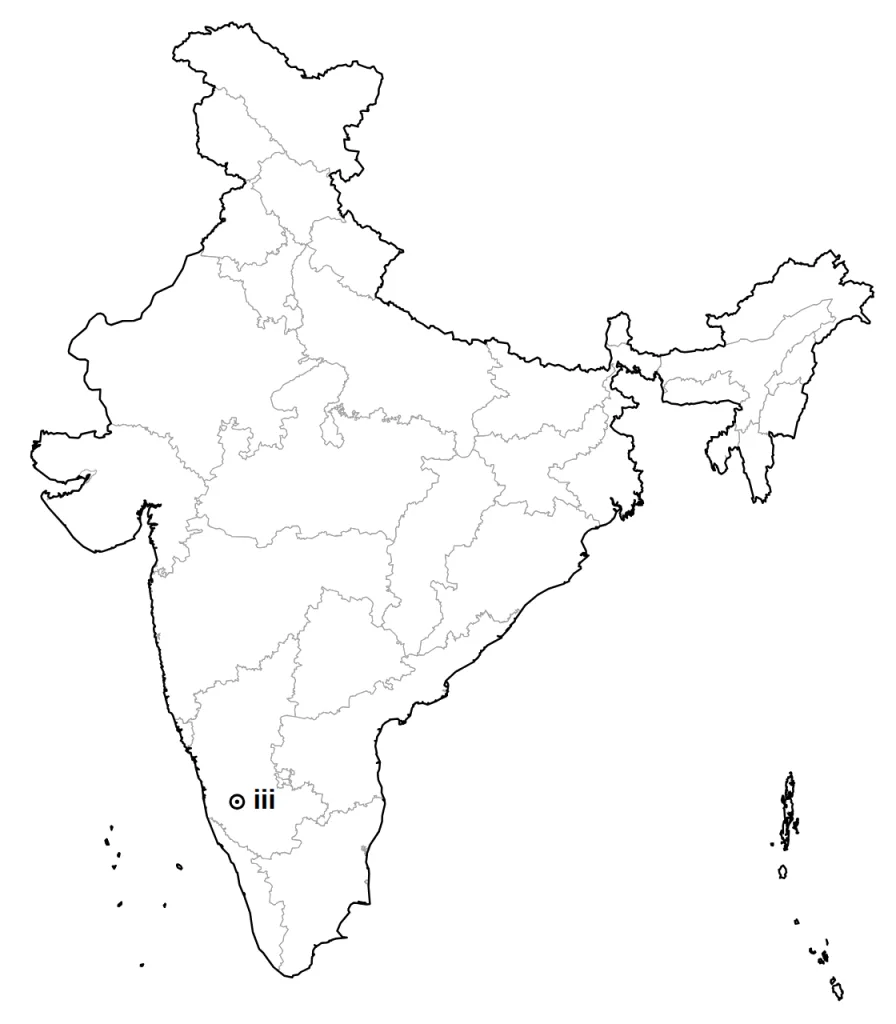
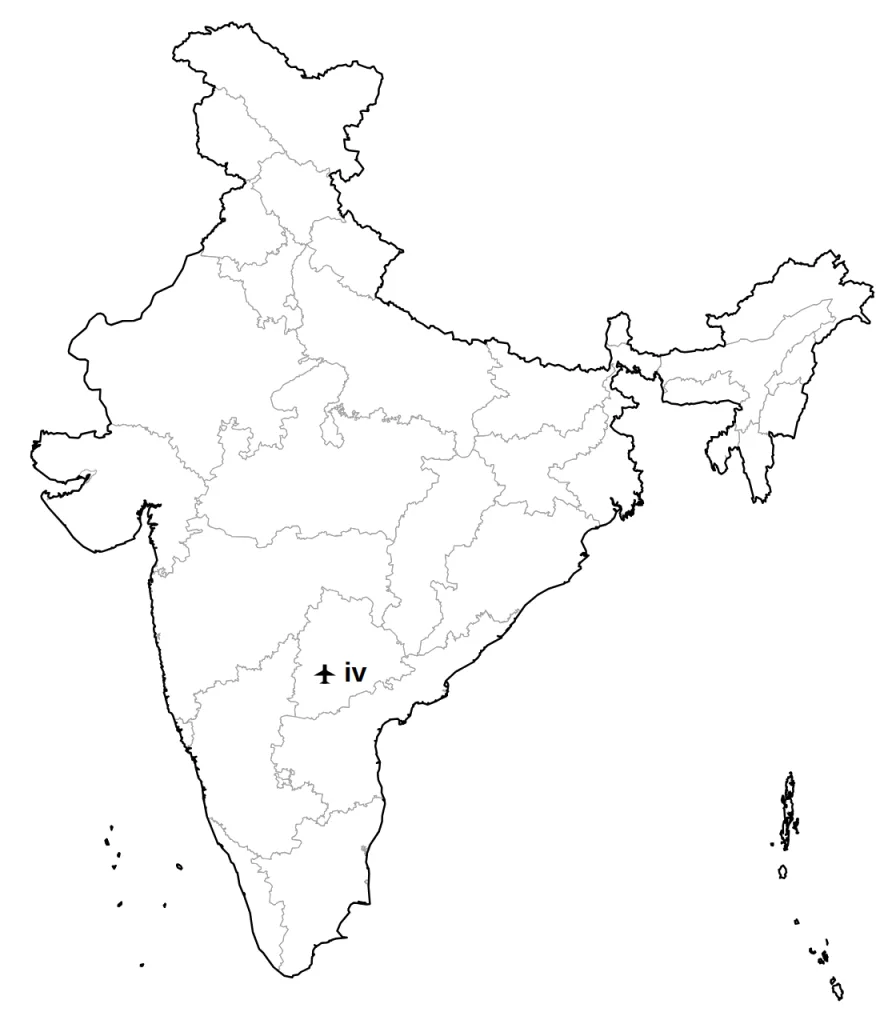
On the outline map of India given for this question, locate and label any three of the following with suitable symbols.
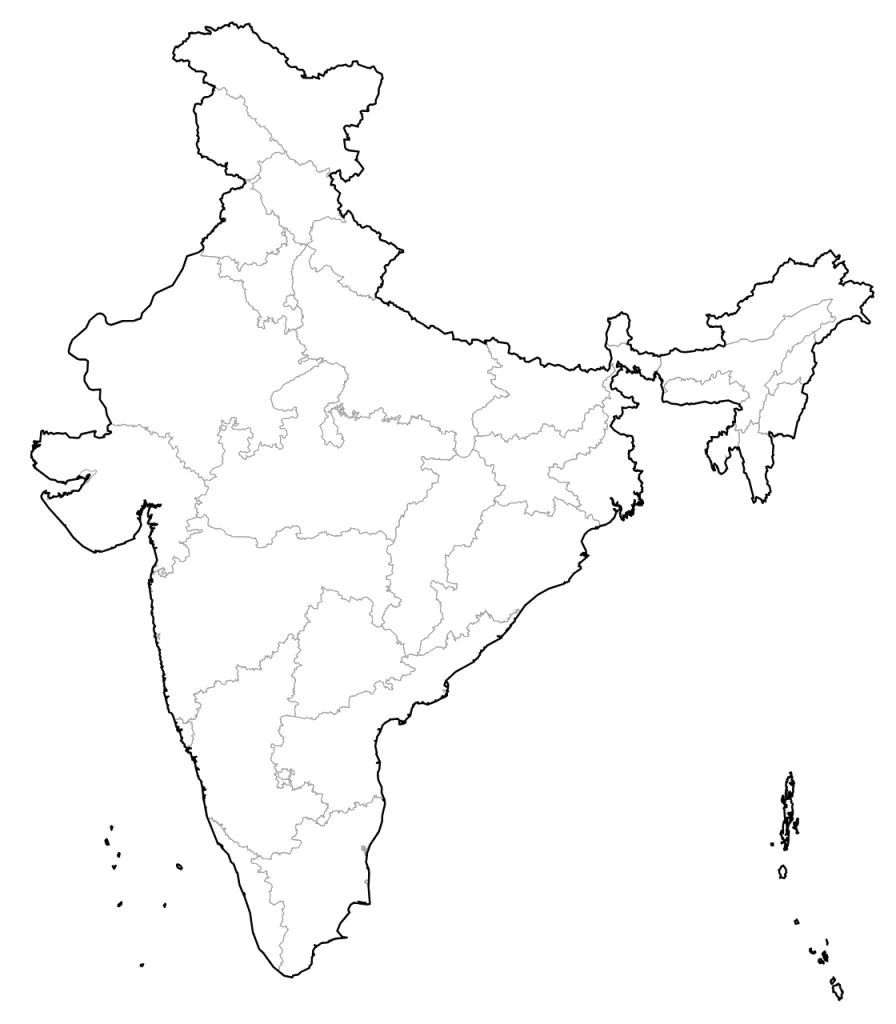
(i) Bhilai - an iron and steel plant (1 mark)
Answer.
- Bhilai: in Chhattisgarh, near Durg, located correctly with a symbol and labelled — 1 mark
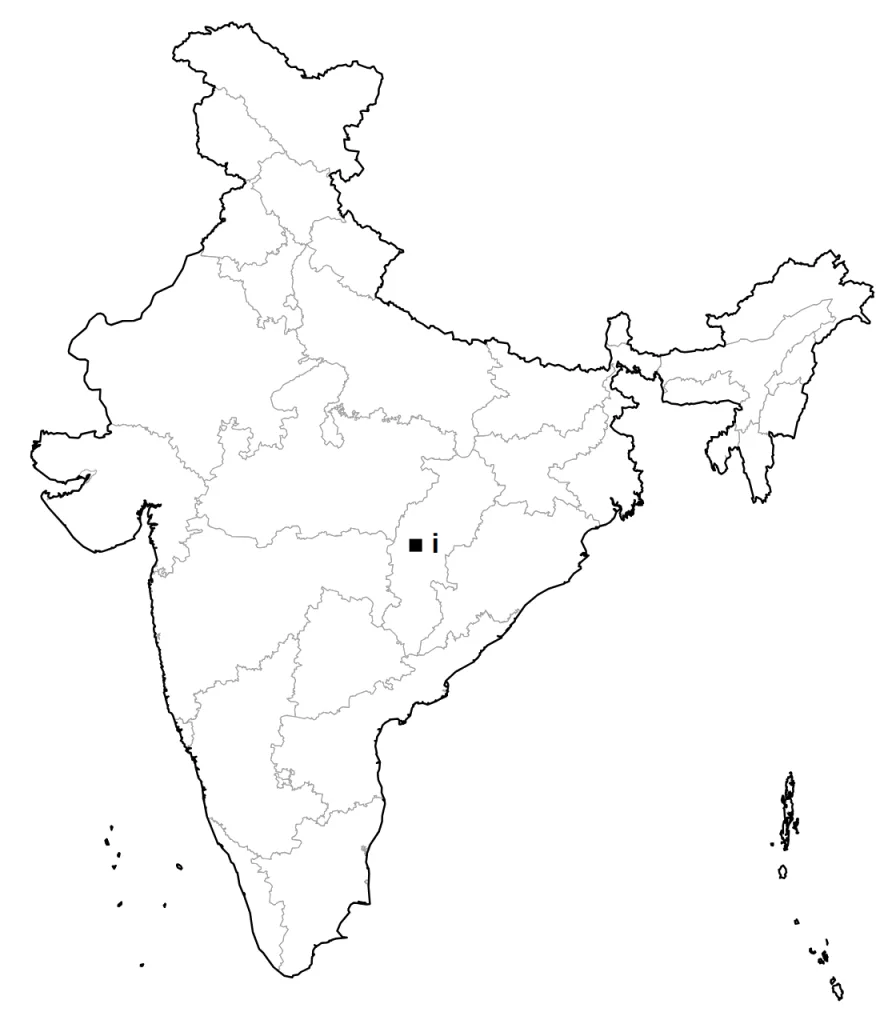
(ii) Rana Pratap Sagar Dam (1 mark)
Answer.
- Rana Pratap Sagar Dam: on the Chambal in south-eastern Rajasthan, located correctly with a symbol and labelled — 1 mark
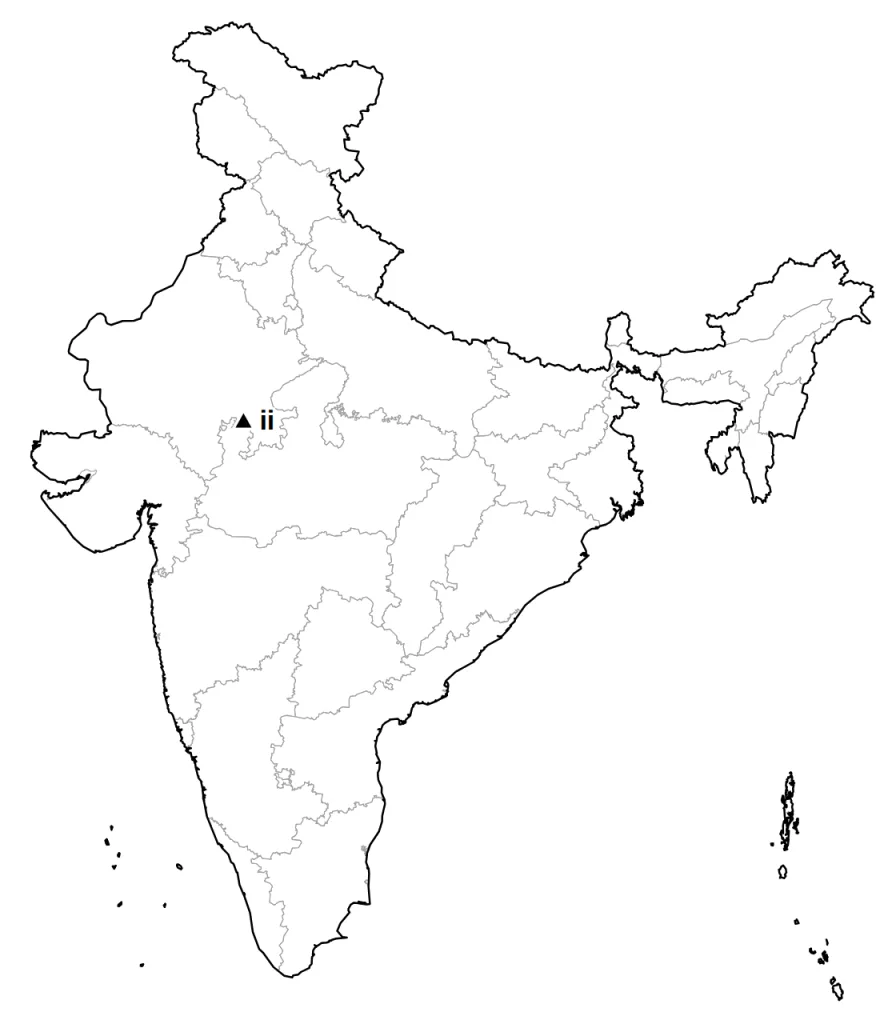
(iii) The state that leads India in the production of coffee (1 mark)
Answer.
- Karnataka: the leading coffee-producing state, marked within Karnataka, located correctly with a symbol and labelled — 1 mark
(iv) Rajiv Gandhi International Airport (1 mark)
Answer.
- Rajiv Gandhi International Airport: at Hyderabad, Telangana, located correctly with a symbol and labelled — 1 mark
Section C - Political Science (20 marks)
Question 24 (2 marks)
In the imaginary State of Sundergarh, the same party has won every Assembly election for twenty years. A student concludes that power is no longer shared in the State. Explain two ways in which power is still shared there.
Answer.
Model answer:
First, the legislature, executive and judiciary still share power; ministers must answer the Assembly, which approves their laws and budget. Second, the State government shares power with the Union above and with panchayats and municipalities below.
Marking scheme:
- Among organs of government (horizontal): the legislature, the executive and the judiciary share power and check one another; for example, the ministers must answer the Assembly's questions, and their laws and budget need its approval — 1 mark
- Among levels of government (vertical): the State government shares power with the Union Government above it and with panchayats and municipalities below it (accept: power shared with social groups through reserved constituencies; opposition parties, pressure groups and movements influencing decisions) — 1 mark
Question 25 (2 marks)
In the imaginary democracy of Solavia, any party that wins a majority of seats may form the government, but a law says that the Prime Minister must always belong to the country's largest language community. Explain two reasons why this law makes Solavia's democracy less able to accommodate social diversity.
Answer.
Model answer:
First, it breaks political equality: the top post depends on a citizen's language group at birth, not on votes or ability. Second, smaller communities can never lead, so they may not feel equal partners.
Marking scheme:
- It breaks political equality: a citizen's chance of holding the top office depends on the language group he or she was born into, not on votes or ability — 1 mark
- The smaller communities can never lead the country, however they vote, so they may feel they are not equal partners, and distrust between groups can grow (accept: parties may be pushed to seek votes on language lines; any other relevant point) — 1 mark
Question 26 (3 marks)
In the imaginary town of Kesarpur, girls are kept at home more often than boys to help with housework; women who work on the farms are called 'helpers' and are paid less; and the town's traders' association has never had a woman office-bearer. Explain three ways in which the sexual division of labour lies behind these facts.
Answer.
Model answer:
First, housework and child care are seen as women's work, so girls are kept home and miss school. Second, women's work is undervalued: housework is unpaid, and farm work by women is called 'help' and paid less. Third, this double burden, and the belief that public affairs are men's business, keep women out of public bodies.
Marking scheme:
- It rests on the belief that housework and bringing up children are mainly women's work; girls are raised to help at home while boys are not, so girls' schooling suffers — 1 mark
- Women's work, at home or outside, is often unpaid or not valued: housework is not counted as work, and farm work by women is treated as mere 'help' and paid less — 1 mark
- Burdened with housework as well as paid work, and held back by the idea that public matters are men's business, women play a very small role in public life, such as associations and politics — 1 mark
Question 27 (5 marks)
Answer the following about two reforms that now apply to elected members and candidates in India.
(a) Evaluate the anti-defection law: the problem it was meant to solve, what it has achieved, and one drawback. (3 marks)
Answer.
Model answer:
Earlier, MLAs and MPs often switched parties after winning, to become ministers or for money, against the voters' choice. Now a member who changes party loses the seat, and defections have fallen. But dissent is harder, since members must obey the party leaders even when they disagree.
Marking scheme:
- Problem: elected MLAs and MPs used to change parties after winning, often to become ministers or for money, which went against the voters' choice — 1 mark
- Achievement: under the anti-defection amendment, an MLA or MP who switches party after the election loses his or her seat; this has brought defections down — 1 mark
- Drawback: dissent has become harder, since members must accept whatever the party leaders decide, even when they disagree — 1 mark
(b) Evaluate the rule that every candidate must file an affidavit: what it aims to do, and one limitation. (2 marks)
Answer.
Model answer:
To reduce the hold of money and crime, every candidate must declare property and pending criminal cases, so voters can know. But no one checks whether the details are true, and such candidates can still contest.
Marking scheme:
- Aim: to reduce the influence of money and criminals, the Supreme Court ordered every candidate to give details of property and pending criminal cases, which voters can now see — 1 mark
- Limitation: there is no system to check whether the details are true, and candidates with cases can still contest, so its effect is not yet clear — 1 mark
OR
Some reforms of political parties have been suggested but not yet made into law. Answer the following.
(a) Give one advantage and one difficulty of a law to regulate the internal working of political parties. (2 marks)
Answer.
Model answer:
Such a law would make parties keep member registers, follow their constitutions and hold open elections, giving ordinary members a voice. But over-regulation can backfire, since parties may find ways to cheat the law.
Marking scheme:
- Advantage: parties would have to keep a register of members, follow their own constitution, have an independent authority to settle disputes and hold open elections to top posts, so ordinary members get a real voice — 1 mark
- Difficulty: over-regulation can be counter-productive, since all parties may find ways to cheat the law, and it could let the government interfere in parties (accept: the parties themselves would have to pass such a law; any other valid difficulty) — 1 mark
(b) Give one advantage and one difficulty of state funding of elections. (2 marks)
Answer.
Model answer:
Parties would depend less on rich donors, which reduces money power. But sharing the money fairly is hard, as dividing it by past votes favours big parties, and parties may still take hidden money.
Marking scheme:
- Advantage: if the government gives parties money or things like petrol, paper and telephones for election expenses, parties depend less on rich donors, which reduces the power of money — 1 mark
- Difficulty: public money must be shared fairly, for example by votes won in the last election, which can favour big parties; and parties may still take hidden money (any other valid difficulty) — 1 mark
(c) Explain one way in which ordinary citizens can help to reform political parties without a new law. (1 mark)
Answer.
Model answer:
Citizens can press parties through petitions, publicity and agitations, or join parties and change them from within.
Marking scheme:
- Any one: put pressure on parties through petitions, publicity and agitations, with the help of the media, pressure groups and movements; or join parties in large numbers and change them from within — 1 mark
Question 28 (4 marks)
Read the source given below and answer the questions that follow.
A Ward Meeting in Devnagar
(A newspaper report from an imaginary city, written for this question)
Thirty years ago Devnagar was a small town. Today it is a city of fifteen lakh people, run by an elected municipal corporation of eighty wards, each of which chooses its own councillor.
Last Sunday, the councillor of Ward 12, a schoolteacher elected from a seat reserved for women, held an open meeting in the community hall. More than two hundred residents came. Within an hour they had listed every choked drain, broken streetlight and overflowing garbage point in the ward. Some residents also complained that the river embankment near the ward had cracked; the councillor said that the embankment is built and repaired by a department of the State government, and promised to pass the complaint on.
The mayor, who presides over the corporation, visited the ward on Tuesday. By Friday the drains had been cleared, but the crack in the embankment was still there.
28.1 To which tier of government in India's federal system does the Devnagar corporation belong? (1 mark)
Answer.
Model answer:
The third tier: local government, below the Union and the State.
Marking scheme:
- The third tier, local government (an urban local body), below the Union and the State governments — 1 mark
28.2 Suppose the residents of Ward 12 feel that their councillor is not acting on their complaints. Explain two ways in which they can hold her to account. (2 marks)
Answer.
Model answer:
First, elections to local bodies must be held regularly, so the residents can vote her out at the next election. Second, they can question her at open ward meetings, or take their complaint to the mayor and the corporation, or to the local press.
Marking scheme:
- Elections to local bodies must, under the Constitution, be held regularly (every five years), so the residents can vote her out at the next election — 1 mark
- They can question her at open ward meetings, take their complaint to the mayor and the elected corporation, or use petitions and the local press to draw attention (any other relevant way) — 1 mark
28.3 Why could the councillor not get the embankment repaired as quickly as the drains? (1 mark)
Answer.
Model answer:
The embankment is the State government's work; the corporation handles only local matters such as drains.
Marking scheme:
- The embankment is not a subject of the corporation: it is handled by the State government, while local bodies deal only with the local matters that State laws give them, such as drains, streetlights and garbage — 1 mark
Section D - Economics (20 marks)
Question 35 (3 marks)
In the imaginary village of Kalyanpur, the school register shows that almost every child aged 14 and 15 is enrolled. A visiting officer finds that on most days only about six in ten of these children are in class. Many boys work at a brick kiln during the season, and many girls stay at home to look after younger children.
(i) Which indicator used to compare development would show what the officer found? Give a reason. (1 mark)
Answer.
Model answer:
The net attendance ratio, since it counts the children of 14 and 15 who actually attend school, not names on a register.
Marking scheme:
- Net attendance ratio: it counts the children of age 14 and 15 who actually attend school, as a share of all children of that age, not just those on the register — 1 mark
(ii) Explain two reasons why low attendance at this age matters for Kalyanpur's development, even if family incomes are rising. (2 marks)
Answer.
Model answer:
First, children who miss school gain few skills, so they are less likely to find regular, better-paid work later. Second, development also means education and equal opportunity; girls kept at home lose these even if income rises.
Marking scheme:
- Children who miss school leave with few skills, so later they are less likely to get regular, better-paid work; the village's future income and choices suffer — 1 mark
- Development also means non-income goals such as education, equal opportunity and freedom; girls kept at home lose these even when family income rises (any other relevant point) — 1 mark
Question 36 (3 marks)
A student says, 'A bank is just a safe locker where people keep their money.' Explain three points to show why this view is wrong.
Answer.
Model answer:
First, a bank keeps only a small part of its deposits, about 15 per cent in India, as cash for daily withdrawals. Second, it lends most of the deposits to people and businesses who need money. Third, it charges more interest on loans than it pays on deposits, and this difference is its main income.
Marking scheme:
- A bank keeps only a small part of its deposits (about 15 per cent in India) as cash, to meet the withdrawals made on any day — 1 mark
- It uses the major part of the deposits to give loans to people and businesses who need money — 1 mark
- It charges a higher rate of interest on loans than it pays on deposits; this difference is its main source of income (accept: depositors earn interest and can make payments by cheque from their deposits) — 1 mark
Question 37 (3 marks)
People, like goods and money, sometimes move from one country to another.
(i) Why do people usually move from one country to another? (1 mark)
Answer.
Model answer:
They usually move in search of better income, better jobs or better education.
Marking scheme:
- In search of better income, better jobs or better education — 1 mark
(ii) In the last few decades, goods and investment have moved between countries far more than people have. Explain why. (2 marks)
Answer.
Model answer:
First, countries restrict who may come to live and work, through visas, work permits and limits on numbers. Second, governments, including India's after 1991, removed many barriers on trade and investment but not on people, so goods and investment flowed far more freely.
Marking scheme:
- Countries place many restrictions on people who want to come and live or work in them, such as visas, work permits and limits on numbers, so the movement of people has not grown much — 1 mark
- Governments, including India's after 1991, removed many barriers on foreign trade and foreign investment, so goods and investment could flow much more freely than people (accept: moving abroad is costly and needs skills or language) — 1 mark
Question 38 (5 marks)
The table shows the share of each sector in the GDP and in the workforce of the imaginary country of Nandia. Study the table and answer the questions that follow. (The data are hypothetical, for practice only.)
| Sector | Share of GDP, 2000 (%) | Share of GDP, 2020 (%) | Share of workers, 2000 (%) | Share of workers, 2020 (%) |
|---|---|---|---|---|
| Primary | 32 | 16 | 64 | 54 |
| Secondary | 26 | 28 | 14 | 20 |
| Tertiary | 42 | 56 | 22 | 26 |
(i) Between 2000 and 2020, by how many percentage points did the tertiary sector's share of GDP rise, and by how many did its share of workers rise? (1 mark)
Answer.
Model answer:
Its share of GDP rose by 14 points, but its share of workers by only 4 points.
Marking scheme:
- Share of GDP rose by 14 points (42 to 56); share of workers rose by only 4 points (22 to 26) — 1 mark
(ii) Compare these two rises. What can you infer from them about the kind of service jobs that grew in Nandia? Give two points. (2 marks)
Answer.
Model answer:
First, much of the growth came from high-value services like IT and banking, which produce a lot with few workers. Second, such jobs need educated, skilled workers, so most people leaving farms could not get them.
Marking scheme:
- Much of the growth came from high-value services, such as information technology, banking and communication, which produce a great deal with relatively few workers — 1 mark
- These jobs need educated and skilled workers, so most people leaving farming could not take them up; the sector did not absorb many new workers (accept: many service workers remain in small, low-paid jobs) — 1 mark
(iii) The secondary sector's share of workers rose by 6 points, but its share of GDP by only 2. What can you infer from this about the new jobs in this sector? Give two points. (2 marks)
Answer.
Model answer:
First, most new jobs are labour-intensive, in small workshops or on construction sites, where each worker adds little output. Second, many are likely unorganised jobs with low pay and little security, taken by people leaving farms.
Marking scheme:
- Most new jobs are labour-intensive work in small workshops or on construction sites, where each worker adds little to output — 1 mark
- Many of these jobs are probably in the unorganised sector, with low pay and little security, taken up by people moving off the farms (any other relevant point) — 1 mark
OR
Study the same table and answer the following.
(i) By how many percentage points did the secondary sector's share of workers change between 2000 and 2020? (1 mark)
Answer.
Model answer:
It rose by 6 percentage points, from 14% to 20%.
Marking scheme:
- It rose by 6 percentage points, from 14 to 20 per cent — 1 mark
(ii) Suggest two steps that would help workers who leave farming to find jobs in Nandia's growing service sector. (2 marks)
Answer.
Model answer:
First, schooling and skill training in computers, nursing or repair work would let workers take up the new service jobs. Second, cheap loans would let them start small service businesses, such as transport or repair shops.
Marking scheme:
- One step with how it helps, e.g. schooling and skill training (computers, nursing, repair work) so that workers can take up the new service jobs — 1 mark
- A second step with how it helps, e.g. cheap loans to start small service businesses such as transport or repair shops; better roads and buses to reach jobs in towns (any other relevant step) — 1 mark
(iii) Many of the new secondary-sector jobs in Nandia are in small workshops and on construction sites. Explain one benefit and one risk of such jobs for workers who have moved off the farms. (2 marks)
Answer.
Model answer:
The benefit is a cash income from productive work, better than being underemployed on a crowded family farm. The risk is that such jobs are often unorganised, with low wages, no contract or paid leave, and workers can be removed at any time.
Marking scheme:
- Benefit: a cash income from productive work, better than being underemployed on a crowded family farm — 1 mark
- Risk: such jobs are often unorganised, with low wages, no written contract, no paid leave and little safety, and workers can be removed at any time — 1 mark