
Detailed Solutions: CBSE Class 10 Social Science Sample Paper 2027 – Set 3
Every written question from the paper (2, 3, 4 and 5 marks) is solved here in order, with the marks given for each step, so you can check your answer sheet the way an examiner would. Where a question has an internal choice (OR), both options are solved. The 1-mark questions are answered, with explanations, in the quiz on the Question Paper page.
Section A - History (20 marks)
Question 5 (2 marks)
Historians still argue about where many everyday foods, such as noodles and pasta, first came from. What do such debates tell us about the pre-modern world? Give two points.
Answer.
Model answer:
First, such likenesses suggest that traders and travellers carried recipes, not only goods, over long distances, so cultures borrowed from each other. Second, similar foods existed in many lands, so many 'local' foods have mixed, uncertain roots.
Marking scheme:
- Long-distance contact: such likenesses suggest that traders and travellers crossing land and sea carried food habits, recipes and crops, not only goods, from one region to another; they point to cultural exchange — 1 mark
- Mixed origins: similar foods were known in several lands (China, Italy, India, Japan), so many 'local' foods have shared or mixed roots that cannot always be traced to one place (accept: the origins are uncertain because similar foods were known in many lands; any other relevant point) — 1 mark
Question 6 (3 marks)
Explain three ways in which a nation-state, as it took shape in nineteenth-century Europe, was different from the dynastic empires that had ruled much of the continent before.
Answer.
Model answer:
First, a dynastic empire was held together by loyalty to its ruling family; a nation-state's citizens share a common identity and history. Second, the empire mixed many languages and cultures; a nation-state rests on one people and culture. Third, an empire's borders followed royal marriages and wars; a nation-state claims its land as one people's homeland.
Marking scheme:
- Tie that held people together: in a dynastic empire the only common tie of its many peoples was loyalty to the ruling family or emperor; in a nation-state the citizens, and not only the rulers, share a sense of common identity and history — 1 mark
- People and culture: a dynastic empire held peoples of many languages and cultures who did not see themselves as one community; a nation-state is built around one people claiming a shared language and culture within a defined territory — 1 mark
- Territory: a dynastic empire's borders were fixed by royal marriages, inheritance and wars between ruling houses; a nation-state claims its territory as the homeland of one nation (accept: the nation-state claimed to speak for the nation, whose people saw themselves as citizens rather than a ruler's subjects; any other relevant point) — 1 mark
OR
'In the middle of the nineteenth century, many women took an active part in the liberal and national movements of Europe, yet they were denied political rights.' Support this statement with three points.
Answer.
Model answer:
First, women formed their own political associations and started newspapers. Second, they joined political meetings and demonstrations and demanded rights, including the vote. Third, most liberals gave political rights only to men, often only to men with property, so women were kept out of the vote even for the elected assembly of 1848.
Marking scheme:
- Organising: women formed their own political associations and started newspapers to spread their views — 1 mark
- Public action: they took part in political meetings and demonstrations, and pressed for rights for themselves, including the right to vote — 1 mark
- Denial: most liberal-nationalists gave political rights only to men, often only to men who owned property; women were kept out of the vote when an elected assembly for the German lands was chosen in 1848 (accept: laws treated women as minors under the control of fathers and husbands; any other relevant point) — 1 mark
Question 7 (5 marks)
Imagine three people in a Punjab town in April 1919: a cloth merchant, a worker in a railway workshop, and a lawyer who had followed the debates of the Imperial Legislative Council. Answer the following.
(a) Explain why each of them had reason to join the protests that Gandhiji called for in April 1919. (3 marks)
Answer.
Model answer:
The merchant paid for the war through higher customs duties and a new income tax, which cut into his trade.
The worker saw prices almost double between 1913 and 1918 while his wages lagged, so his earnings bought far less.
The lawyer saw the Rowlatt Act forced through the Council against the Indian members. It allowed detention without trial, which struck at the rule of law.
Marking scheme:
- Merchant: the war was paid for through loans and heavier taxes; customs duties were raised and an income tax was brought in, which ate into his trade and profits — 1 mark
- Worker: prices roughly doubled between 1913 and 1918 while wages did not keep pace, so his family's earnings bought far less than before — 1 mark
- Lawyer: the Rowlatt Act was pushed through the Council despite the united opposition of its Indian members; it allowed political prisoners to be held without trial for two years, which struck at the rule of law on which his work rested (accept: each could join in his own way, the merchant by closing his shop in the hartal, the worker by striking, the lawyer by speaking at rallies) — 1 mark
(b) The protests of April 1919 were strong in towns like theirs, but they reached few villages. Give two reasons for this. (2 marks)
Answer.
Model answer:
First, the Act concerned arrests and trials, which educated townspeople followed closely, while the call said nothing about peasants' own worries, such as revenue and rents. Second, the protest spread through town newspapers, meetings, shops and workshops, and no organisation yet existed to carry it to the villages.
Marking scheme:
- The issue spoke mainly to townspeople: the Rowlatt Act was about arrests, trials and political rights, which educated town dwellers followed closely, while the call did not take up the peasants' own grievances, such as land revenue and rents — 1 mark
- No means to reach the villages: the protest spread through town networks such as newspapers, public meetings, shops and workshops, and no organisation yet existed to carry it into the countryside (accept: it was called off within days, after violence and the crackdown in Punjab, so it had no time to spread; any other relevant point) — 1 mark
OR
Satyagraha asked a great deal of the people who took part in it. Answer the following.
(a) Explain three things that satyagraha demanded of its followers. (3 marks)
Answer.
Model answer:
First, followers had to stay non-violent even when beaten or insulted, and win the opponent over rather than defeat him. Second, they had to break unjust laws openly and accept arrest, fines, jail or loss of property. Third, the cause had to be just and the action open and disciplined, stopping if it turned violent.
Marking scheme:
- Non-violence even under provocation: followers could not hit back or take revenge, even when beaten or insulted; they had to win the opponent over, not defeat him by force — 1 mark
- Readiness to suffer: they had to break an unjust law openly and accept arrest, fines, jail or the loss of property without giving in — 1 mark
- Truth and discipline: the cause had to be just and the action open, not secret; followers had to act together on the leader's call and stop if the struggle turned violent (accept: giving up hatred of the opponent; any other relevant point) — 1 mark
(b) Show, with two examples from the satyagrahas of 1917-18, what these demands meant for ordinary people in practice. (2 marks)
Answer.
Model answer:
In Champaran in 1917, indigo peasants had to stand up openly, without violence, to the planters they depended on. In Ahmedabad in 1918, mill workers who stopped work for better wages had to hold out peacefully without pay.
Marking scheme:
- Ahmedabad (1918): cotton mill workers who stopped work for better wages had to hold out peacefully, without their pay, until a settlement was reached — 1 mark
- Champaran (1917): indigo peasants had to stand up openly, and without violence, to the powerful plantation system and its officials, although they depended on it for land and work (any other relevant example) — 1 mark
Question 8 (4 marks)
Read the source given below and answer the questions that follow.
Two Pamphlets and a Printer
In the 1830s, a small printing press stood near the river ghat of a Bengal town we shall call Nabagram. Its owner, Haripada, printed almanacs, school primers and shop bills. One spring, a group of young reformers brought him a short pamphlet in plain, everyday Bengali. It argued that a long-standing custom had no basis in the old scriptures and should be given up. Two weeks later, a group of elders who wanted the custom kept came with a reply, just as sharply worded. Haripada printed both, and both sold out.
Most people in Nabagram could not read, yet by the end of the month everyone seemed to have an opinion. The schoolmaster read the pamphlets aloud at the ghat every evening, and his listeners argued late into the night. Merchants carried copies to the villages upriver. Later in the century, presses in the cities of the north were printing sacred texts in Hindi and Urdu in small, cheap editions that a pilgrim could carry in a cloth bag. (Nabagram and Haripada are imaginary.)
8.1 How did the arguments in the pamphlets reach people in Nabagram who could not read? (1 mark)
Answer.
Model answer:
The schoolmaster read them aloud at the ghat every evening, and the listeners argued over them.
Marking scheme:
- The schoolmaster read the pamphlets aloud at the ghat every evening, and listeners discussed them — 1 mark
8.2 Why was Haripada willing to print the pamphlets of both sides? (1 mark)
Answer.
Model answer:
Printing was his business: both pamphlets found buyers and brought him income, whether or not he agreed with them.
Marking scheme:
- Printing was his trade: he printed whatever customers paid for, and both pamphlets sold well, so both brought him income; he did not have to agree with either side — 1 mark
8.3 Explain two ways in which cheap printed pamphlets and religious texts in Indian languages changed religious life and debate in nineteenth-century India. (2 marks)
Answer.
Model answer:
First, texts and arguments reached far more people in their own language, even non-readers who heard them read aloud. Second, debates within and between religious groups grew sharper, as each side printed its views to win support, and new ideas came out of these clashes.
Marking scheme:
- Religious texts and arguments reached a very wide circle of people in their own language, including those who could not read (through reading aloud), and ordinary believers could read or hear the texts for themselves, not only through learned specialists — 1 mark
- Debates within and among religions grew wider and sharper: different groups printed their own views to win supporters and answer their rivals, and new ideas came out of these clashes (accept: people in distant regions came to read the same texts, which linked them) — 1 mark
Question 9 (2 marks)
On the political outline map of India given for this question, two places are marked as A and B. Identify them with the help of the information given below and write their correct names.
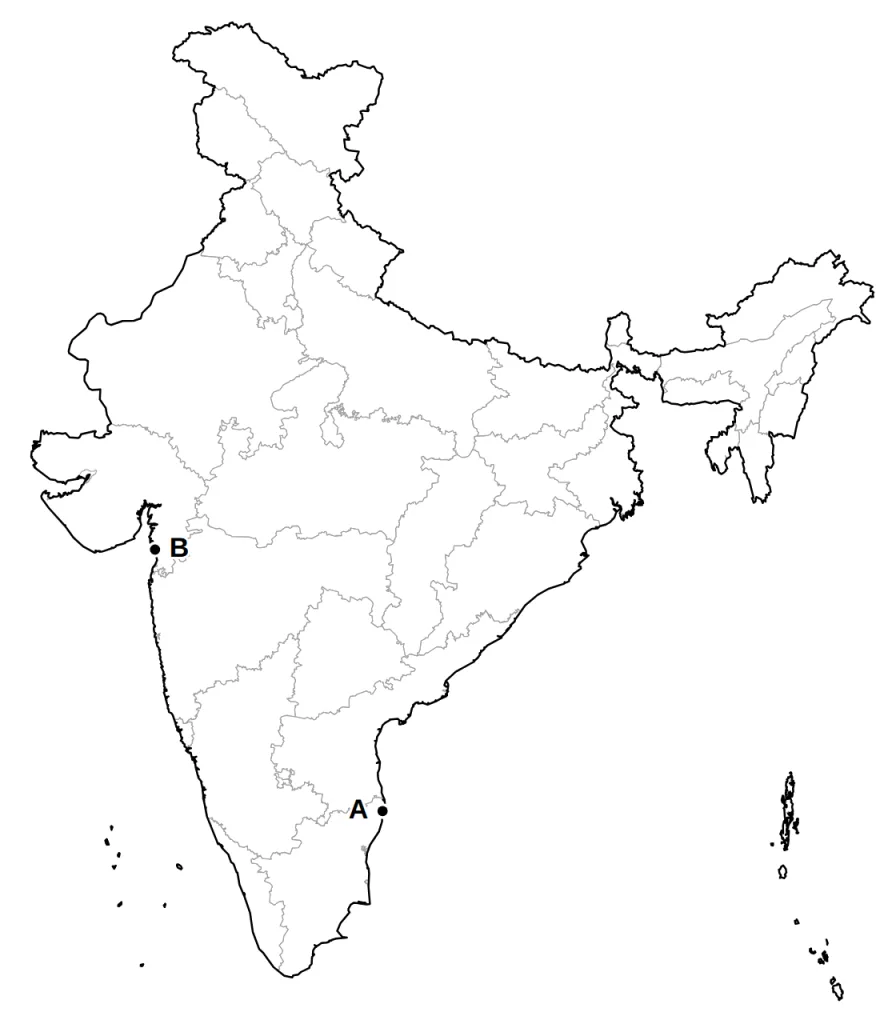
A The city where, at its session of December 1927, the Indian National Congress decided to boycott the all-British commission sent to review the working of India's system of government. (1 mark)
Answer.
- A: Madras, now Chennai (Tamil Nadu) — 1 mark
B The seaside village where the Civil Disobedience Movement began, when the government's salt law was openly broken in April 1930. (1 mark)
Answer.
- B: Dandi (Gujarat) — 1 mark
Section B - Geography (20 marks)
Question 16 (2 marks)
Your school has changed to LED lights and makes sure that fans and computers are switched off in empty rooms. Explain two ways in which such steps help the country, and not just the school's electricity bill.
Answer.
Model answer:
First, most of our electricity comes from burning coal, which cannot be replaced, so saving power makes this limited stock last longer. Second, burning less coal means less smoke, ash and greenhouse gas, so the air stays cleaner.
Marking scheme:
- Most of India's electricity comes from thermal power stations that burn coal, a non-renewable resource; saving power means less coal is burnt, so the limited stock lasts longer (accept: fewer new power stations or less imported fuel needed) — 1 mark
- Burning less coal means less smoke, ash and greenhouse gases, so there is less air pollution and less harm to the environment (accept: the power saved can reach homes and villages that lack it; any other relevant point) — 1 mark
Question 17 (5 marks)
The government of a State wants a large cement plant to be set up in one of its backward districts. The district has hills of limestone. Answer the following.
(a) Explain three conditions that such a plant needs, which the district must either offer or arrange. (3 marks)
Answer.
Model answer:
First, cement needs bulky raw materials such as limestone, silica and gypsum, so the plant must sit near them; the district's limestone helps. Second, it needs coal and a steady power supply, which the district must arrange. Third, it needs good rail and road links to bring in coal and send heavy cement to markets.
Marking scheme:
- Raw materials: cement is made from large quantities of limestone, with silica and gypsum, which are costly to carry, so the plant must be close to them; the district's limestone meets part of this need — 1 mark
- Coal and a steady supply of electric power to run the kilns and machines, which the district must arrange — 1 mark
- Good rail and road links, to bring in coal and other inputs and to carry heavy cement to the markets (accept: water, labour, a nearby market; any other relevant condition) — 1 mark
(b) Explain two ways in which the plant could help the district. (2 marks)
Answer.
Model answer:
First, it gives jobs and regular incomes to local people, which narrows the gap between backward and developed regions. Second, transport, repair shops, trade and small industries grow around it, and the nearby town grows too.
Marking scheme:
- It gives jobs and regular incomes to local people, which helps to reduce the gap between backward and developed regions — 1 mark
- Other activities grow around it, such as transport, repair shops, trade and smaller industries, and the town around it grows: industry and urbanisation go hand in hand (accept: cement for local building work; any other relevant point) — 1 mark
OR
A coal-based thermal power station stands beside a river and a farming village. The villagers complain of smoke and dust in the air, of warm, dirty water flowing into the river, and of heaps of ash spreading over nearby fields. Answer the following.
(a) Explain how the power station is polluting the air, the water and the land around it. (3 marks)
Answer.
Model answer:
The air is polluted by smoke, dust, fly ash and harmful gases from burning coal. The river is harmed by hot water and waste from the plant, which raise its temperature and hurt fish. The land is spoilt by dumped ash, which lowers the soil's fertility and can seep into groundwater.
Marking scheme:
- Air: burning coal releases smoke, dust and fine particles such as fly ash, and harmful gases — 1 mark
- Water: hot water and waste from the plant raise the river's temperature and dirty it, which harms fish and other life in the water (thermal pollution) — 1 mark
- Land: ash and other waste dumped in the open make the soil less fertile and can seep into the groundwater — 1 mark
(b) Suggest two measures, of the kind that NTPC has taken at its power stations, that would reduce this harm. (2 marks)
Answer.
Model answer:
First, the ash should be put to use in bricks, cement or road-building, with ash ponds and recycled ash water, instead of being dumped. Second, electrostatic precipitators and filters should trap the dust, and a green belt of trees should be planted around the station.
Marking scheme:
- One measure, e.g. make the fullest use of the ash, in bricks, cement or road-building, instead of dumping it; ash ponds and recycling of ash water — 1 mark
- A second measure, e.g. fit electrostatic precipitators, fabric filters or scrubbers to trap dust; treat and cool waste water before it reaches the river; plant green belts; keep a regular watch on the local environment (any other relevant measure) — 1 mark
Question 18 (4 marks)
Read the source given below and answer the questions that follow.
A Hill Town Writes Its Own Plan
Thirty years after world leaders met at Rio de Janeiro, the municipal council of Devpur, a small hill town, set out to write a plan for its own future. Its team first counted what the town had: a spring-fed lake, patches of oak forest, terraced fields on the slopes and the groundwater under the valley.
The count brought bad news. Hotels had pushed their buildings to the very edge of the lake, and sewage from new colonies was draining into it. The oak forest was being cut for firewood by families of the Bhimnagar colony, who had no gas connections and no steady work.
The council's plan tied the two problems together. Families of the colony would be trained to run a tree nursery and a waste-sorting centre, and would get cooking gas at a lower price; in return, the forest would be closed to cutting. Before the plan was adopted, officials checked it against the State's schemes for forests, housing and water supply. (Devpur is an imaginary town.)
18.1 Name one resource of Devpur that the source shows being used in a way that cannot last. (1 mark)
Answer.
Model answer:
The oak forest, which is being cut for firewood.
Marking scheme:
- Any one: the lake (built over at its edge and polluted by sewage) or the oak forest (cut for firewood) — 1 mark
18.2 The plan links saving the forest with work and cheaper fuel for the families of the colony. Explain how this reflects the aims agreed upon at the Earth Summit of 1992. (2 marks)
Answer.
Model answer:
Agenda 21, adopted at the Earth Summit, aims to fight environmental damage and poverty together, as Devpur does with its forest and the colony. It also asked every local government to make its own plan for sustainable development, meeting today's needs without harming the future.
Marking scheme:
- Agenda 21, adopted at the Earth Summit, aims to fight environmental damage together with poverty and disease, through cooperation on shared needs and responsibilities; Devpur tackles forest loss and the colony's poverty together — 1 mark
- It is sustainable development at the local level: meeting people's present needs without harming the resources future generations will need; Agenda 21 asked every local government to draw up its own local Agenda 21, as Devpur has done — 1 mark
18.3 Why did the officials check the town's plan against the State's schemes before adopting it? (1 mark)
Answer.
Model answer:
A local resource plan has to match the wider development plans of the State and the country, so that they support each other.
Marking scheme:
- In resource planning, a local plan has to be matched with the overall (State and national) development plans, so that the two fit together and support each other (accept: to get funds and avoid clashes) — 1 mark
Question 19 (3 marks)
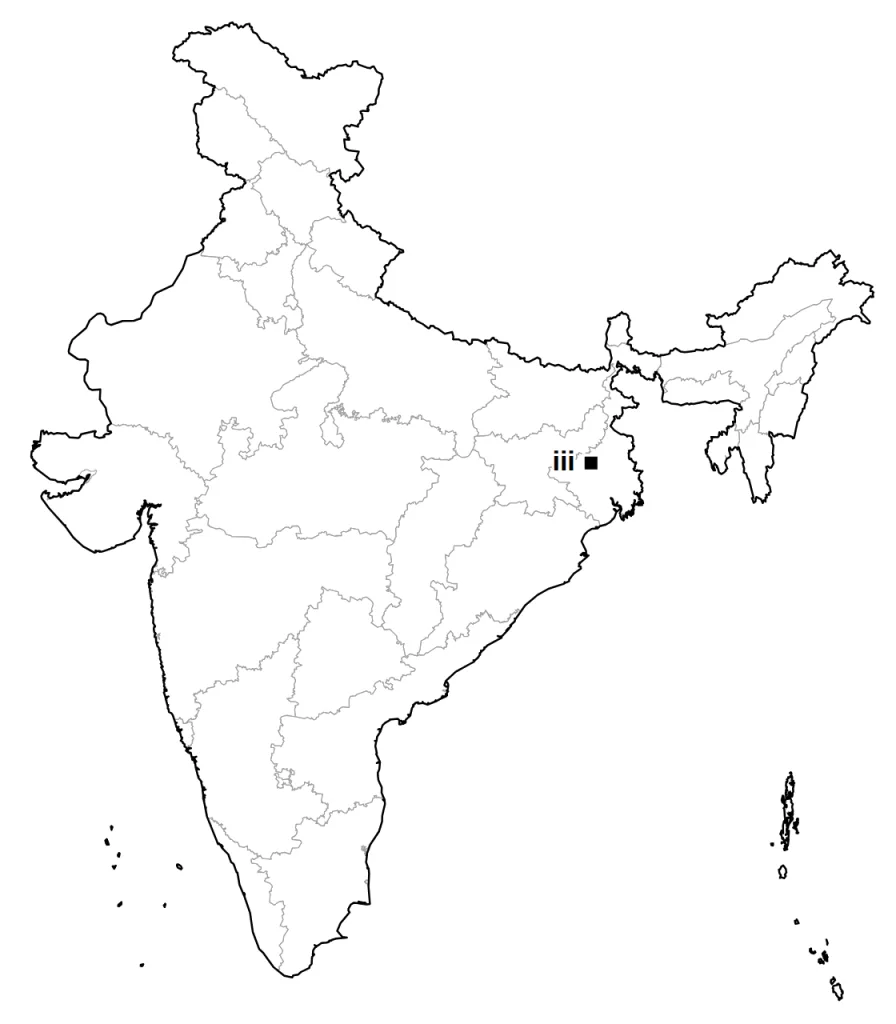
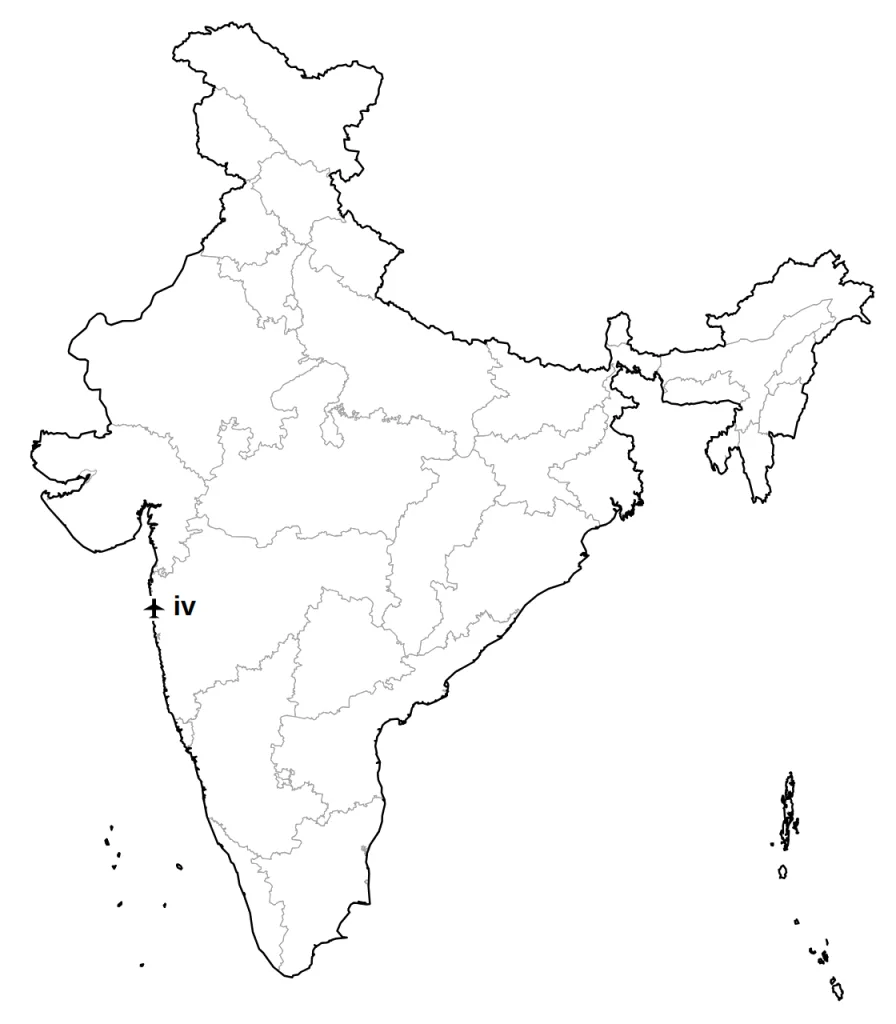
Attempt any three of the following. Show each place with a suitable symbol on the outline map of India given for this question, and write its name beside it.
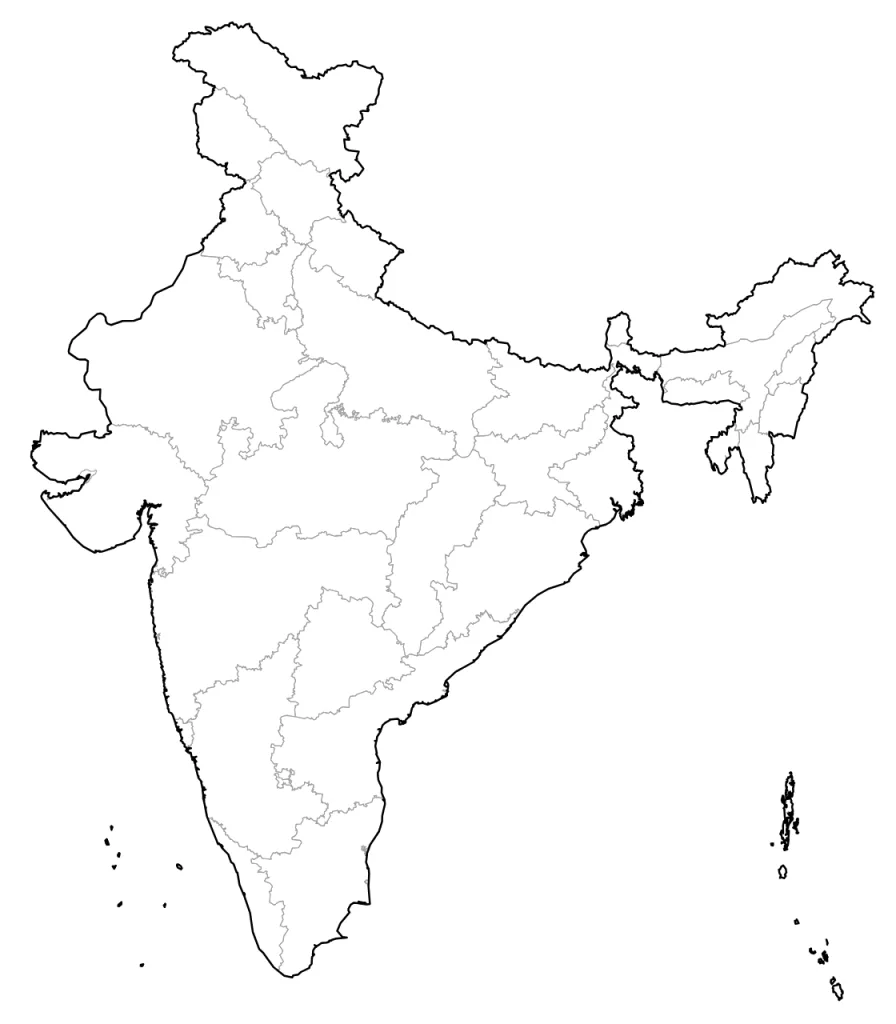
(i) Nagarjuna Sagar Dam (1 mark)
Answer.
- Nagarjuna Sagar Dam: on the Krishna, on the Telangana-Andhra Pradesh border, located correctly with a symbol and labelled — 1 mark
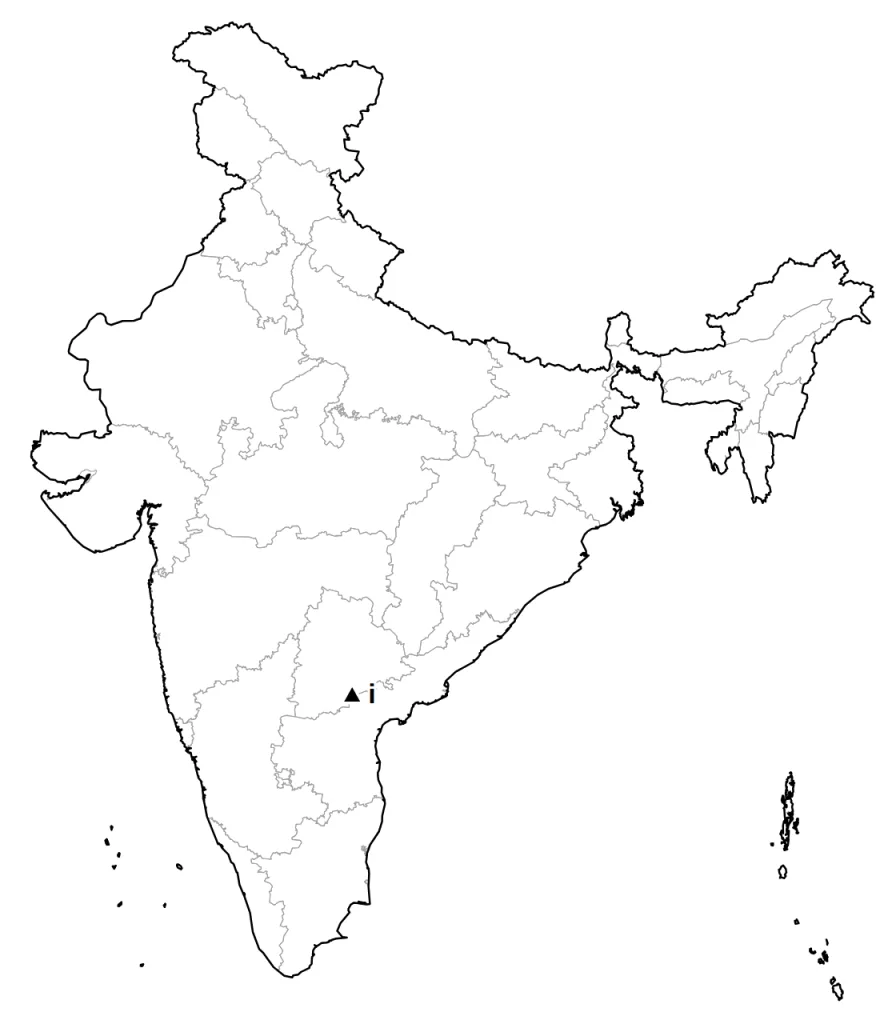
(ii) Narora Nuclear Power Plant (1 mark)
Answer.
- Narora: on the Ganga in western Uttar Pradesh, located correctly with a symbol and labelled — 1 mark
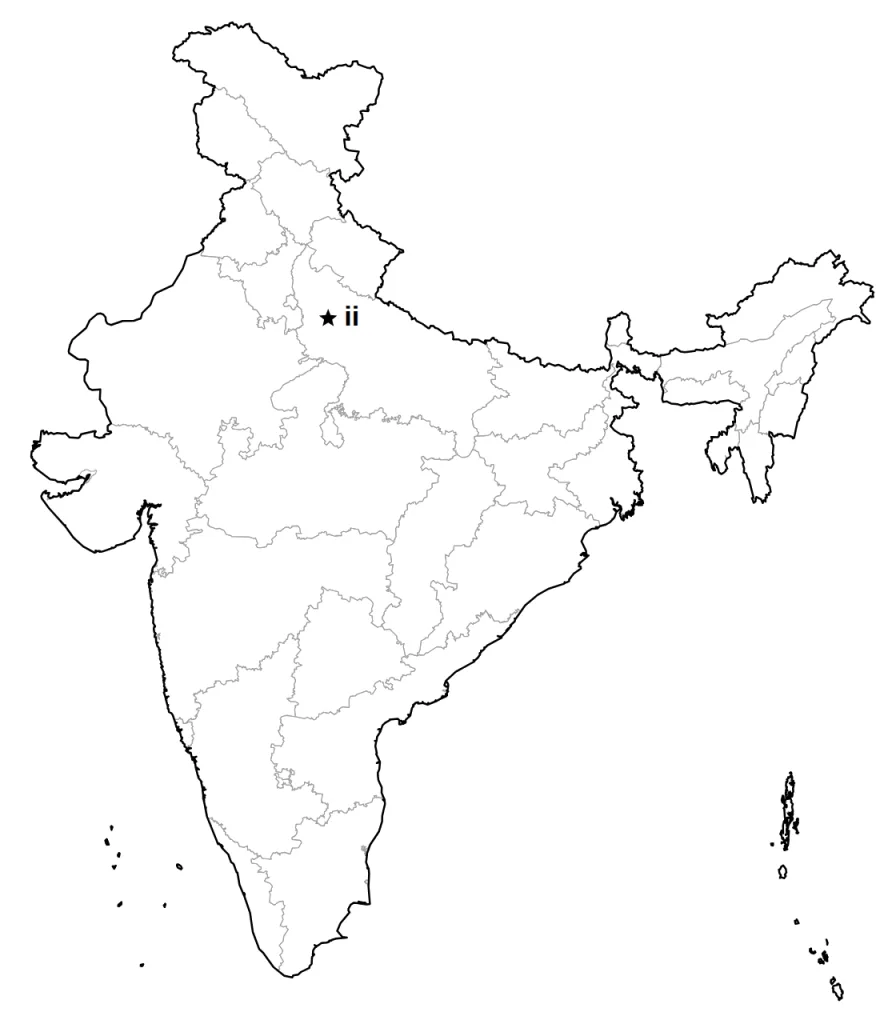
(iii) Durgapur - an iron and steel plant (1 mark)
Answer.
- Durgapur: in the Damodar valley, West Bengal, located correctly with a symbol and labelled — 1 mark
(iv) Chhatrapati Shivaji Maharaj International Airport (1 mark)
Answer.
- Chhatrapati Shivaji Maharaj International Airport: at Mumbai, Maharashtra, located correctly with a symbol and labelled — 1 mark
Section C - Political Science (20 marks)
Question 24 (2 marks)
Education is on the Concurrent List of the Indian Constitution. Explain two reasons why it makes sense for both the Union Government and the State governments to be able to make laws on it.
Answer.
Model answer:
First, the country needs common standards, so a certificate earned in one State counts everywhere; the Union can set these. Second, each State knows its needs, such as the language of teaching, and can make laws to suit them.
Marking scheme:
- The whole country has a stake: some things must be the same everywhere, such as basic standards, so that a certificate or degree earned in one State is accepted in all the others, and national aims such as schooling for every child are met; the Union can lay these down — 1 mark
- Each State knows its own people: the language of teaching, local subjects, and the number and kind of schools needed in hilly, tribal or crowded areas differ from State to State, so each State can make laws to suit them (accept: if the two laws clash, the Union law prevails, so the country is not left with conflicting rules; any other relevant point) — 1 mark
Question 25 (2 marks)
In many democracies, the main political parties now differ very little from one another in their policies. Explain two reasons why this is a challenge for democracy, even when elections are free and fair.
Answer.
Model answer:
First, voters lose a real choice: people wanting a different policy have no party to vote for, so elections cannot change the government's direction. Second, the same leaders keep moving between parties, so votes cannot bring new leaders.
Marking scheme:
- Voters lose a real choice: if the main parties offer much the same policies, people who want a very different policy have no party to vote for, so an election cannot change the direction of government — 1 mark
- Even the leaders hardly change, since the same set of leaders keep moving from one party to another; so parties feel little pressure to respond to voters, and people lose faith in elections (any other relevant point) — 1 mark
Question 26 (3 marks)
Explain three forms in which caste can be seen in Indian politics.
Answer.
Model answer:
First, parties look at the caste make-up of a constituency and put up candidates from castes that can win support. Second, when a government is formed, parties see that people of different castes and tribes get a place in it. Third, candidates appeal to caste feeling in campaigns, and some parties are seen as speaking for particular castes.
Marking scheme:
- Choosing candidates: parties keep in mind the caste make-up of the voters of a constituency and put up candidates from castes that can win their support — 1 mark
- Forming governments: parties take care that representatives of different castes and tribes find a place in the government — 1 mark
- Campaigns: parties and candidates appeal to caste feeling to win votes, and some parties are seen as favouring or speaking for particular castes (accept: universal adult franchise led leaders to mobilise every caste; castes once treated as low gained a new political voice; any other relevant point) — 1 mark
Question 27 (5 marks)
The imaginary democracy of Anvara has three language communities and two large religious groups. Answer the following.
(a) Explain three conditions that Anvara's democracy must meet if it is to accommodate this social diversity. (3 marks)
Answer.
Model answer:
First, the majority must work with the minorities, so that the government speaks for all and not only for the largest group. Second, majority rule must not become rule by one religious or language community; majorities should change from issue to issue. Third, every citizen should have a chance to be in the majority some time, whatever group he or she is born into.
Marking scheme:
- The majority must always work with the minority, so that the government stands for the general view and not only for the largest group — 1 mark
- Rule by the majority must not become rule by one community: the majority should change from issue to issue and election to election, and should not be fixed by religion or language — 1 mark
- Every citizen must have a chance of being in the majority at some time; no one should be kept out of power or office because of the group he or she was born into (accept: power-sharing arrangements between the communities; any other relevant point) — 1 mark
(b) Explain two reasons why a democracy usually handles such social differences better than a non-democratic government. (2 marks)
Answer.
Model answer:
First, groups in a democracy can press their demands through votes, parties, courts and open debate, so tensions seldom turn violent. Second, non-democratic rulers often ignore or crush differences until they explode, while democracies accept them and learn to bargain.
Marking scheme:
- A democracy gives groups peaceful ways, such as elections, parties, courts and open debate, to put forward their demands and to bargain, so tensions are less likely to turn violent — 1 mark
- Non-democratic regimes often ignore or suppress social differences, so grievances build up; democracies accept differences as normal and slowly develop ways of negotiating them (any other relevant point) — 1 mark
OR
In the imaginary country of Varsa, the hill peoples were long treated as inferior: officials spoke to them rudely, and their languages were not used in schools or government offices. Varsa has now been a democracy for twenty years. Answer the following.
(a) Explain three ways in which democracy is likely to have improved the dignity and freedom of the hill peoples. (3 marks)
Answer.
Model answer:
First, their votes count as much as anyone's, so leaders must seek their support. Second, they are free to organise and ask peacefully for their languages in schools and offices. Third, officials answer to elected representatives, and rude or unfair treatment can be raised in the press, the legislature or court.
Marking scheme:
- Equal votes: every hill person's vote counts as much as anyone else's, so parties and leaders have to seek their support and listen to them — 1 mark
- Freedom to keep and press for their own ways: they can form associations and ask, peacefully, for their languages to be used in schools and offices, and a democracy can meet such demands without seeing them as a threat — 1 mark
- Respect from those in power: officials answer to elected representatives, and rude or unfair treatment can be raised in the press, in the legislature or in court (any other relevant point) — 1 mark
(b) Explain two reasons why the hill peoples may still face unequal treatment at times. (2 marks)
Answer.
Model answer:
First, old attitudes change slowly, so some people and officials may still look down on them. Second, poverty, distance and little schooling keep many from knowing their rights or pressing them.
Marking scheme:
- Old attitudes change slowly: people and officials who long looked down on them may still do so, even though the law treats everyone as equal — 1 mark
- Using rights is hard for many: poverty, distance from towns and little schooling mean that many do not know their rights or cannot afford the time and cost of pressing them (any other relevant point) — 1 mark
Question 28 (4 marks)
Read the source given below and answer the questions that follow.
'Better Slow than Broken'
Anna, a retired teacher in Belgium, often talks to her grandchildren about the country she grew up in. 'When I was young,' she says, 'our two big language groups hardly trusted each other. My Dutch-speaking neighbours felt that the French speakers had long kept the better jobs and the bigger say, though there were fewer of them. The French speakers feared that the larger group would soon outvote them on everything. A quarrel over a school or a street sign could become a fight about who owned the country.
'So our leaders bargained for years, and in the end nobody got everything. The larger group gave up the right to fill most seats in the national cabinet: ministers now come from the two groups in equal numbers. The smaller group gave up its old hold on the country's top posts. Each group votes for its own parties, and each region runs many of its own affairs.
'Yes, it is slow. Forming a national government can take many months. But better slow than broken. We are still one country, and nobody is afraid of the other any more.' (Anna is an imaginary person.)
28.1 Anna says that 'nobody got everything'. Give one example from the source of something that one of the groups gave up. (1 mark)
Answer.
Model answer:
The larger, Dutch-speaking group gave up the right to fill most cabinet seats; ministers now come from both groups in equal numbers.
Marking scheme:
- Any one: the larger (Dutch-speaking) group gave up the right to fill most seats in the national cabinet, which now has equal numbers of ministers from both groups; or the smaller (French-speaking) group gave up its old hold on the country's top posts — 1 mark
28.2 The system is slow for everyone. Explain two reasons why the smaller, French-speaking group would still accept it. (2 marks)
Answer.
Model answer:
First, it can no longer be outvoted: with equal numbers of ministers, decisions need its consent, and the delay is the price of that protection. Second, the alternatives were worse: as a permanent minority it could lose its say, and endless quarrels could split the country.
Marking scheme:
- It can no longer be outvoted on matters that affect it: with equal numbers of ministers, decisions need its agreement, so the delay is the price of this protection — 1 mark
- The other choices were worse: as a permanent minority under simple majority rule it could lose its say, and constant quarrels could lead to civil strife or a break-up of the country; peace and security are worth some delay (accept: its own region runs many of its affairs; any other relevant point) — 1 mark
28.3 Using the source, explain why forming a national government in Belgium can take many months. (1 mark)
Answer.
Model answer:
Each group has its own parties, and the cabinet needs equal numbers of ministers from both, so parties of both groups must first bargain and agree.
Marking scheme:
- Each language group has its own parties, and the cabinet must have equal numbers of Dutch- and French-speaking ministers, so parties from both groups must bargain and agree before a government can be formed — 1 mark
Section D - Economics (20 marks)
Question 35 (3 marks)
In an imaginary country that is rich today, most people worked on farms in 1850, and by 1950 more people worked in factories than in any other sector. Answer the following.
(i) Which sector was the most important in this country in 1950? (1 mark)
Answer.
Model answer:
The secondary sector.
Marking scheme:
- The secondary sector (manufacturing) — 1 mark
(ii) Explain two ways in which the growth of factories would also have helped the farms of this country. (2 marks)
Answer.
Model answer:
First, factories bought cotton, sugarcane and grain as raw materials, so farmers found bigger markets. Second, factories made tools, pumps, machines and fertilisers that helped farms grow more.
Marking scheme:
- Factories bought farm produce, such as cotton, sugarcane and grain, as raw material, so farmers found bigger markets and earned more — 1 mark
- Factories made tools, machines, pumps and fertilisers that helped farms grow more (accept: roads and railways built for industry carried farm produce to distant markets; any other relevant point) — 1 mark
Question 36 (3 marks)
Five years ago, a large modern hospital opened in the main town of the imaginary district of Ratanpur. Yet the district's life expectancy at birth has hardly changed. Explain three possible reasons for this.
Answer.
Model answer:
First, one hospital in the town may be too far or too costly for village and poor families, so the district's average barely moves. Second, unsafe water and poor sanitation keep causing illness, which a hospital only treats afterwards. Third, underfed people, especially children, fall ill often and recover slowly.
Marking scheme:
- Reach and cost: life expectancy is an average for everyone born in the district; one hospital in the town may be too far, or too costly, for families in distant villages and for the poor, so most people's chances do not change — 1 mark
- Prevention: many illnesses come from unsafe drinking water, poor sanitation and dirty surroundings; a hospital treats people after they fall ill but does not remove these causes — 1 mark
- Food: if many people, especially children, do not get enough to eat, they fall ill often and recover slowly, whatever care is available in the town (accept: few health workers or vaccination in the villages; any other relevant point) — 1 mark
Question 37 (3 marks)
Salma weaves fine woollen shawls in a remote hill district. A new highway and an airport nearby now link the district to the big cities within a few hours. Answer the following.
(i) Which factor of globalisation do the highway and the airport stand for? (1 mark)
Answer.
Model answer:
Improvement in transport technology.
Marking scheme:
- Improvement in transport technology — 1 mark
(ii) Explain two reasons why Salma may still be unable to sell her shawls to buyers in other countries. (2 marks)
Answer.
Model answer:
First, buyers abroad must know of her shawls and be able to order and pay; without a phone, the internet or an exporter, she cannot reach them. Second, the buyer's country, or her own, may still limit such trade through taxes or limits on imports.
Marking scheme:
- Information and contact: buyers abroad must first come to know of her shawls, see her designs, place orders and pay her; without a phone, the internet or a link with an exporter, she cannot reach them — 1 mark
- Trade barriers: the government of the buyer's country, or her own, may still limit such trade, for example through taxes on imports or limits on how much may be brought in, so her shawls cannot enter freely (accept: large buyers want big, regular orders that one weaver without credit cannot supply; any other relevant point) — 1 mark
Question 38 (5 marks)
The table shows the loans taken in one year by households of Amrapur, an imaginary rural block. Study the table and answer the questions that follow. (The data are hypothetical, for practice only.)
| Group of households | Households that took a loan during the year (%) | Share of their loans from banks and cooperatives (%) | Share of their loans from moneylenders, traders and landowners (%) | Average rate of interest paid (% a year) |
|---|---|---|---|---|
| Landless workers | 62 | 15 | 85 | 42 |
| Small farmers | 55 | 45 | 55 | 24 |
| Large farmers | 40 | 90 | 10 | 9 |
(i) Which group of households depends most on informal lenders? Quote the figure that shows it. (1 mark)
Answer.
Model answer:
Landless workers, who get 85% of their loans from informal lenders.
Marking scheme:
- Landless workers: 85% of their loans come from moneylenders, traders and landowners — 1 mark
(ii) Using figures from the table, explain two ways in which this dependence harms these households. (2 marks)
Answer.
Model answer:
First, they pay about 42% a year against 9% for large farmers, so much more of their income goes in repayment, leaving less for food and schooling. Second, such high interest can push them into a debt trap, borrowing again to repay old loans.
Marking scheme:
- Higher cost: they pay about 42% a year against 9% for large farmers, so a much larger part of their earnings goes in repaying loans, leaving less for food, schooling or their work — 1 mark
- Debt trap: at such high rates repayment is hard, so they may have to borrow again to repay, and the debt keeps growing; informal lenders may also impose unfair terms, such as working for the lender or selling produce to him cheaply — 1 mark
(iii) Suggest two ways in which formal credit could reach more of these households, with a reason for each. (2 marks)
Answer.
Model answer:
First, Self-Help Groups: members pool savings, and banks later lend to the group without collateral, since the group ensures repayment. Second, banks and cooperatives should open village branches and lend more to poor households, since their loans are cheaper and supervised by the RBI.
Marking scheme:
- Self-Help Groups: members pool small savings and lend to one another; after a while banks lend to the group without collateral, because the group takes responsibility for repayment — 1 mark
- Banks and cooperatives should lend more to poor rural households, e.g. through village branches and cooperatives that lend to their members, because formal loans are cheaper and their lenders are supervised by the Reserve Bank of India (any other relevant way) — 1 mark
OR
Study the same table and answer the following.
(i) Which group took loans most often during the year, and which group least often? (1 mark)
Answer.
Model answer:
Landless workers borrowed most often (62%), and large farmers least often (40%).
Marking scheme:
- Most often: landless workers (62%); least often: large farmers (40%) — 1 mark
(ii) Explain two reasons why landless workers keep borrowing from informal lenders, even though the table shows that they pay far more for these loans. (2 marks)
Answer.
Model answer:
First, they need small sums at once, for food, illness or a family event, and banks and cooperatives rarely lend such sums quickly. Second, informal lenders, often the landowner they work for, lend at once without papers, taking part of the repayment in labour.
Marking scheme:
- Their needs are small and urgent, often for food, illness or a family event, and banks and cooperatives rarely lend such sums quickly; there may be no branch nearby — 1 mark
- Informal lenders know them personally and lend at once, without papers; often the lender is the landowner they work for, who takes repayment partly in labour, so they cannot easily break away (accept: they have no land or other assets to offer as collateral; any other relevant reason) — 1 mark
(iii) Small farmers get about half of their loans from formal sources. Apart from the rate of interest, explain two ways in which the terms of a bank loan are likely to differ from those of a loan from a moneylender. (2 marks)
Answer.
Model answer:
First, a bank usually asks for collateral such as land papers, and for documents; a moneylender may take gold or make the farmer work for him. Second, a bank sets regular instalments and written terms under RBI supervision; a moneylender may demand everything at harvest and change his terms at will.
Marking scheme:
- Collateral and papers: a bank usually asks for collateral, such as land papers, and for documents; a moneylender may ask for none, or may take gold, or make the farmer work for him or sell his crop to him — 1 mark
- Mode of repayment and rules: a bank fixes regular instalments and written terms, under the supervision of the Reserve Bank of India; a moneylender may demand the whole amount at harvest, on terms he can change as he likes (any other relevant difference) — 1 mark