
Microbes as Biocontrol Agents
Biocontrol is the use of biological methods (living organisms) to control plant diseases and pests, instead of toxic chemical insecticides and pesticides (which pollute the environment and kill many useful organisms). It is a key idea in organic farming.
Beneficial predators
- The ladybird (a beetle) controls aphids.
- Dragonflies control mosquitoes.
Microbial biocontrol agents
- Bacillus thuringiensis (Bt) - a bacterium used to control butterfly caterpillars. It is sold as dried spores mixed with water and sprayed onto plants; when eaten by the insect larvae, the toxin is released in the gut and kills the larvae. Its toxin genes have been introduced into plants (e.g. Bt cotton) to make them insect-resistant.
- Trichoderma - free-living fungi common in root ecosystems; they are effective biocontrol agents of several plant pathogens.
- Baculoviruses (genus Nucleopolyhedrovirus) - viruses that attack insects and other arthropods. They are species-specific and have a narrow spectrum, so they do not harm plants, mammals, birds or beneficial insects - which makes them very useful in Integrated Pest Management (IPM).
One-liners: biocontrol replaces chemical pesticides; ladybird -> aphids, dragonfly -> mosquitoes; Bacillus thuringiensis (Bt) -> caterpillars (Bt cotton); Trichoderma -> plant pathogens; Baculovirus (Nucleopolyhedrovirus) = species-specific, narrow-spectrum (good for IPM).
Microbes as Biofertilisers
Biofertilisers are organisms that enrich the nutrient quality of the soil. The main sources are bacteria, fungi and cyanobacteria.
Bacteria
- Rhizobium lives symbiotically in the root nodules of leguminous plants and fixes atmospheric nitrogen into organic forms that the plant can use.
- Azospirillum and Azotobacter are free-living bacteria in the soil that also fix atmospheric nitrogen, enriching the soil's nitrogen content.
Fungi - mycorrhiza
Mycorrhiza is a symbiotic association between a fungus and the roots of a plant. Many members of the fungal genus Glomus form mycorrhiza. The fungus absorbs phosphorus from the soil and passes it to the plant. Plants with mycorrhizae also show resistance to root pathogens, tolerance to salinity and drought, and an overall increase in growth.
Cyanobacteria
Cyanobacteria are autotrophic microbes; many of them fix atmospheric nitrogen, for example Anabaena, Nostoc and Oscillatoria. In paddy fields they act as important biofertilisers and also add organic matter to the soil, increasing its fertility.
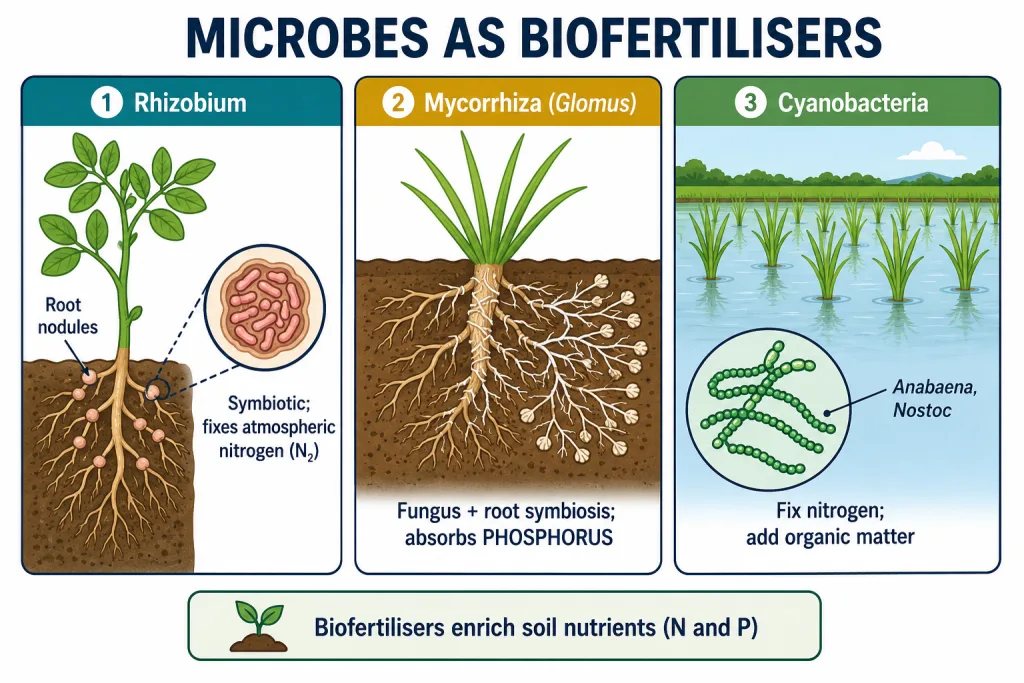
One-liners: Rhizobium = symbiotic N-fixer (legume root nodules); Azospirillum/Azotobacter = free-living N-fixers; mycorrhiza (Glomus) = absorbs phosphorus; cyanobacteria (Anabaena, Nostoc) = N-fixers, biofertilisers in paddy fields.