
Cancer: when division stops obeying the brakes
Contact inhibition holds cell number in check: contact with neighbouring cells stops a sheet of cells expanding once it is crowded. Cancer cells appear to have lost this property, so they divide on and on, building up masses of cells known as tumours.
A benign tumour stays confined to the place where it arose, does not travel, and does little damage. A malignant tumour is a mass of rapidly proliferating neoplastic cells that invades and destroys the tissue around it, starving neighbouring normal cells by competing for vital nutrients. Cells sloughed off such a tumour are carried in the blood, lodge at distant sites and begin fresh tumours there. That property is metastasis, the most feared of all, because the disease is no longer in one place.
[NEET Important] Learn benign and malignant as a pair of behaviours, not as two labels: confined and harmless against invading, starving and seeding. The word metastasis names the seeding step alone, not rapid growth in general.
What starts it, and what is already inside the cell
Agents that transform normal cells into cancerous ones fall into three groups. Physical carcinogens are radiations: ionising X-rays and gamma rays, and non-ionising ultraviolet, all of which damage DNA and lead to neoplastic transformation. Chemical carcinogens are substances taken into the body, the classic example being the carcinogens of tobacco smoke that cause lung cancer. Biological carcinogens are oncogenic viruses, carrying genes called viral oncogenes.
Alongside these, normal cells carry genes of their own called cellular oncogenes, c-onc, or proto-oncogenes. They are not imports; they sit in ordinary cells, and only when activated do they push the cell towards oncogenic transformation. Keep them apart from the viral oncogenes, which come in from outside.
Detecting and treating
A suspected solid growth is confirmed by biopsy and histopathological study: a piece of tissue is cut into thin sections, stained, and examined under a microscope. Cancers of the blood-forming tissue, such as leukaemia, are looked for in blood and bone marrow tests; in leukaemia it is the count of white cells that rises. Radiography (the use of X-rays), computed tomography and magnetic resonance imaging are all used to detect cancers of the internal organs. Antibodies against cancer-specific antigens are also used, and molecular techniques identify people who have inherited a susceptibility, so they can be advised to avoid particular carcinogens.
Treatment is by surgery, radiation therapy (radiotherapy) and immunotherapy, alone or in combination. In radiotherapy the tumour cells are irradiated lethally while the normal tissue around them is protected. Chemotherapeutic drugs, which act on the tumour cells themselves, are also used, and most carry side effects. In immunotherapy the patient's immune system is activated to help destroy the tumour; alpha-interferon is one such substance, and substances that work this way are called biological response modifiers.
Adolescence, and the drugs that reach it
Adolescence bridges childhood and adulthood, broadly twelve to eighteen, and brings considerable physical and behavioural change. It is a very vulnerable phase of mental and psychological development. The common reasons for a first experiment are curiosity, a wish for adventure, the belief that these substances relieve stress, peer pressure, and an unstable family.
The drugs commonly abused fall into three groups. Opioids bind to specific opioid receptors in the central nervous system and gastrointestinal tract; morphine itself, from the latex of the opium poppy, Papaver somniferum, is a very effective sedative and painkiller, and is given to patients who have undergone surgery. Heroin, commonly called smack, is obtained by acetylation of that morphine. Taken by snorting or injection, it is a depressant and slows body functions. Cannabinoids interact with cannabinoid receptors lying principally in the brain; marijuana, hashish, charas and ganja come from the inflorescences of the hemp plant, Cannabis sativa, are inhaled or swallowed, and act on the cardiovascular system. Coca alkaloid, or cocaine, comes from the coca plant, Erythroxylum coca, interferes with transport of the neurotransmitter dopamine, and stimulates the central nervous system to give euphoria and increased energy, with hallucinations at excessive dosage. Atropa belladonna and Datura are other plants with hallucinogenic properties.
Alcohol does its damage over three different timescales. In the short term it leads to reckless behaviour, vandalism and violence; taken to excess it can end in coma and death from respiratory failure, heart failure or cerebral haemorrhage; and taken over years it damages the liver.
[NEET Important] Addiction, tolerance and dependence are three different things. Addiction is a psychological attachment to euphoria and a temporary sense of well-being. Tolerance means receptors now respond only to higher doses, so intake climbs. Dependence is the body's tendency to throw up an unpleasant withdrawal syndrome - anxiety, shakiness, nausea and sweating - when a regular dose is stopped abruptly.
Warning signs, and what actually helps
The signs a parent or teacher is meant to act on are a drop in academic performance, unexplained absence from school, withdrawal from family and friends, neglect of personal hygiene, a change in sleeping and eating habits, and aggressive or rebellious behaviour. Prevention works on the causes, not the substance: avoid undue peer pressure, take the problem to parents and peers instead of hiding it, seek education and counselling that channels energy into other pursuits, and get help early from qualified psychologists and de-addiction programmes.
Tobacco
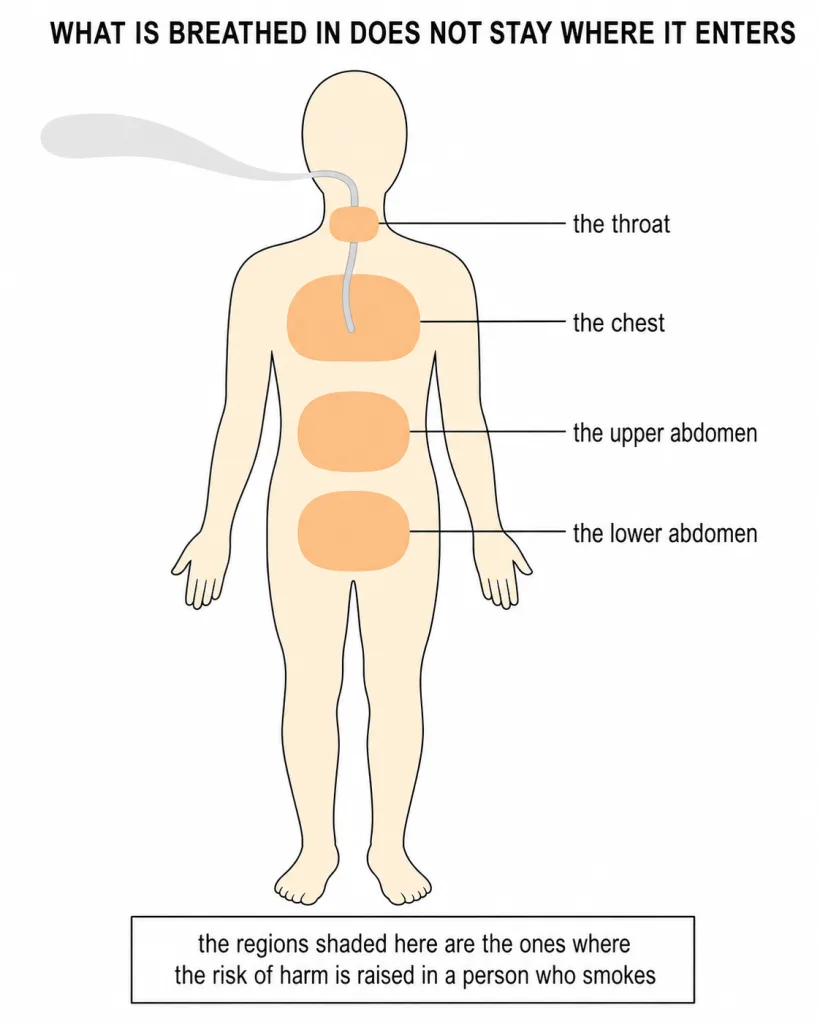
Tobacco has been in use for more than four hundred years, smoked, chewed or taken as snuff. Among its chemicals is nicotine, an alkaloid, which stimulates the adrenal gland to release catecholamines - adrenaline and nor-adrenaline - into the circulation; both raise blood pressure and heart rate. Smoking raises the carbon monoxide content of blood and reduces haem-bound oxygen, leaving the body short of oxygen, and is associated with cancers of the lung, urinary bladder and throat, with bronchitis, emphysema, coronary heart disease and gastric ulcer. Chewing tobacco raises the risk of cancer of the oral cavity.