
The Struggle for a Fair Globalisation
The evidence shows that not everyone has benefited from globalisation. People with education, skill and wealth made the best use of the new opportunities, while many others did not share the benefits.
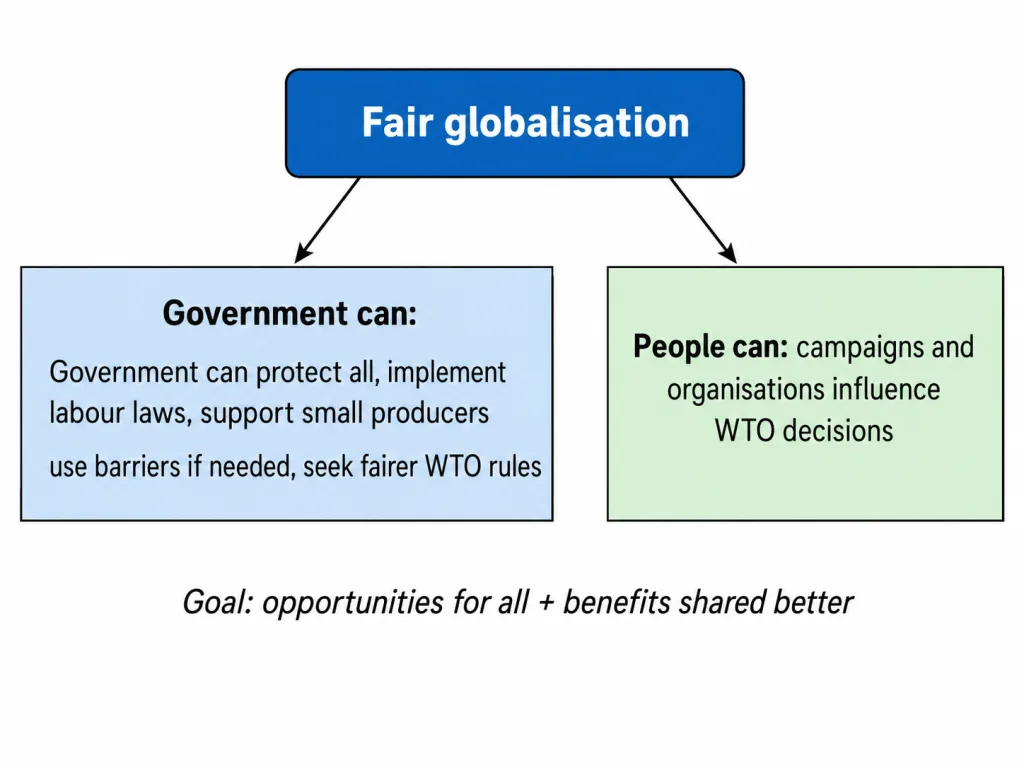
Since globalisation is now a reality, the question is how to make it more fair. Fair globalisation would create opportunities for all and ensure that the benefits are shared better.
The Role of Government and People
The government can play a major role. Its policies must protect the interests of all the people, not just the rich and powerful. For example, the government can:
- ensure labour laws are properly implemented so that workers get their rights;
- support small producers to improve their performance until they are strong enough to compete;
- use trade and investment barriers if necessary;
- negotiate at the WTO for 'fairer rules'; and
- align with other developing countries with similar interests to fight the domination of developed countries in the WTO.
People can also play a role. In recent years, massive campaigns and representation by people's organisations have influenced important decisions on trade and investment at the WTO — showing that people too can help in the struggle for a fair globalisation.
Questions and Answers
Q1. What is meant by 'fair globalisation'?
Answer: Fair globalisation is globalisation that creates opportunities for all and ensures that its benefits are shared better. Since not everyone has gained — the educated, skilled and wealthy benefited most, while many small producers and workers suffered — fair globalisation aims to make the process more just and inclusive so that ordinary people also share in its gains.
Q2. What steps can the government take to make globalisation fairer?
Answer: The government can: (i) frame policies that protect the interests of all people, not just the rich; (ii) ensure labour laws are properly implemented so workers get their rights; (iii) support small producers until they can compete; (iv) use trade and investment barriers where necessary; and (v) negotiate at the WTO for fairer rules and align with other developing countries against the domination of developed countries. These steps help share the benefits of globalisation more widely.
Q3. How can ordinary people contribute to the struggle for a fair globalisation?
Answer: Ordinary people can contribute through campaigns and representation by people's organisations. In recent years, such massive campaigns have influenced important decisions relating to trade and investment at the WTO. This shows that people, by organising and raising their voice, can play an important role in pushing for fairer rules and a more just globalisation.