
Women Organise for Equal Rights
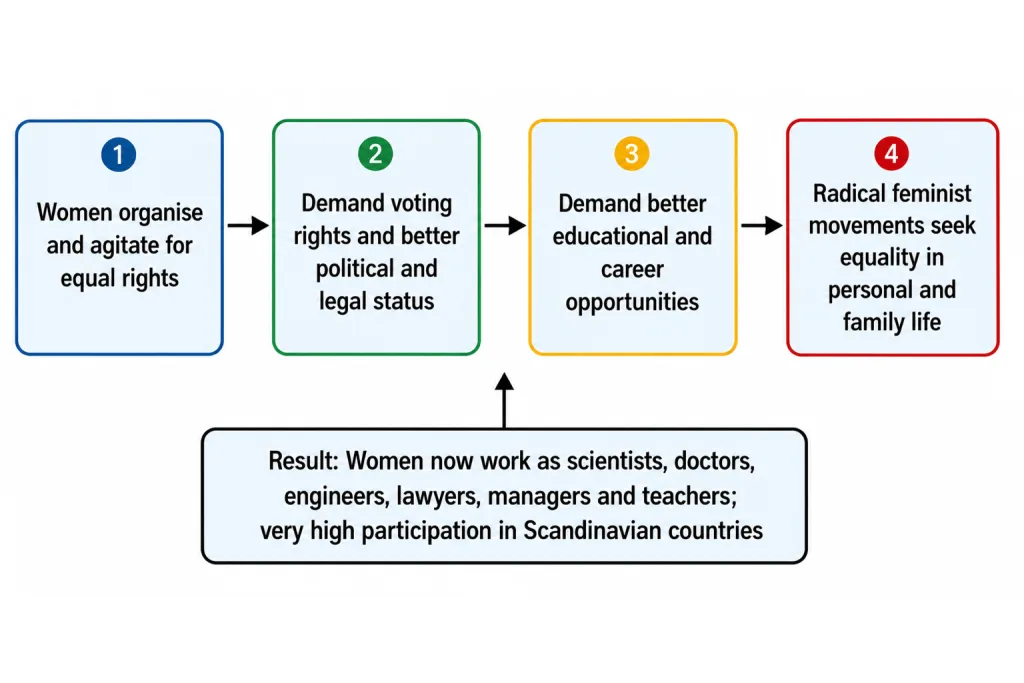
Once the gender issue was raised in politics, women in different parts of the world organised and agitated for equal rights. In many countries there were agitations for the extension of voting rights to women. This political mobilisation on the gender question gradually helped to improve women's role in public life.
These agitations demanded:
- enhancing the political and legal status of women, and
- improving their educational and career opportunities.
More radical women's movements aimed at equality in personal and family life as well. These movements are called feminist movements.
What is Feminism?
- A feminist is a woman or a man who believes in equal rights and opportunities for women and men.
Feminism is therefore not against men; it is against the unequal treatment of women. Moderate demands focused on legal, political and educational equality, while more radical feminist movements sought equality in personal and family life too. The important point is that women's problems began to be raised in the political domain rather than being treated as private matters.
The chapter also raises a fair question: if casteism and communalism are bad because they divide society, what makes feminism a good thing? The answer is that feminism does not aim to divide society; it aims to remove an inequality and to give women the same rights and dignity that men already enjoy.
Progress in Women's Public Role
Political expression of the gender division, and political mobilisation on this question, improved women's role in public life. We now find women working as scientists, doctors, engineers, lawyers, managers and college and university teachers — occupations earlier not considered suitable for women.
In some parts of the world, the participation of women in public life is very high. In the Scandinavian countries — Sweden, Norway and Finland — the participation of women in public life is especially high. These examples show that when the unequal treatment of women is raised politically, disadvantaged groups can make real gains.
Questions and Answers
Q1. What are feminist movements?
Answer: Feminist movements are organised women's movements that demand equal rights and opportunities for women. Their demands included enhancing the political and legal status of women and improving their educational and career opportunities. More radical feminist movements went further and aimed at equality in personal and family life as well.
Q2. Who is a feminist?
Answer: A feminist is a woman or a man who believes in equal rights and opportunities for women and men. A feminist is not anti-men; a feminist opposes the unequal treatment of women and seeks to give women the same dignity, rights and opportunities that men enjoy.
Q3. How has the political expression of the gender division helped women?
Answer: When the gender issue was raised in politics, women organised and agitated for equal rights, including the right to vote. This political mobilisation improved women's role in public life. Today women work as scientists, doctors, engineers, lawyers, managers and teachers — showing that a disadvantaged group benefits when its unequal treatment becomes a political issue.