
The Consumer in the Marketplace
We participate in the market both as producers and as consumers. As consumers, we buy the final goods and services we need. Just as rules are needed to protect workers or borrowers, rules and regulations are needed to protect consumers in the marketplace, because an individual consumer is often in a weak position.
Whenever there is a complaint about a good or service, the seller tries to shift all responsibility onto the buyer ("If you didn't like it, go elsewhere"), as if the seller has no responsibility once the sale is complete. The consumer movement is an effort to change this.
How Consumers Are Exploited
Exploitation in the marketplace happens in many ways:
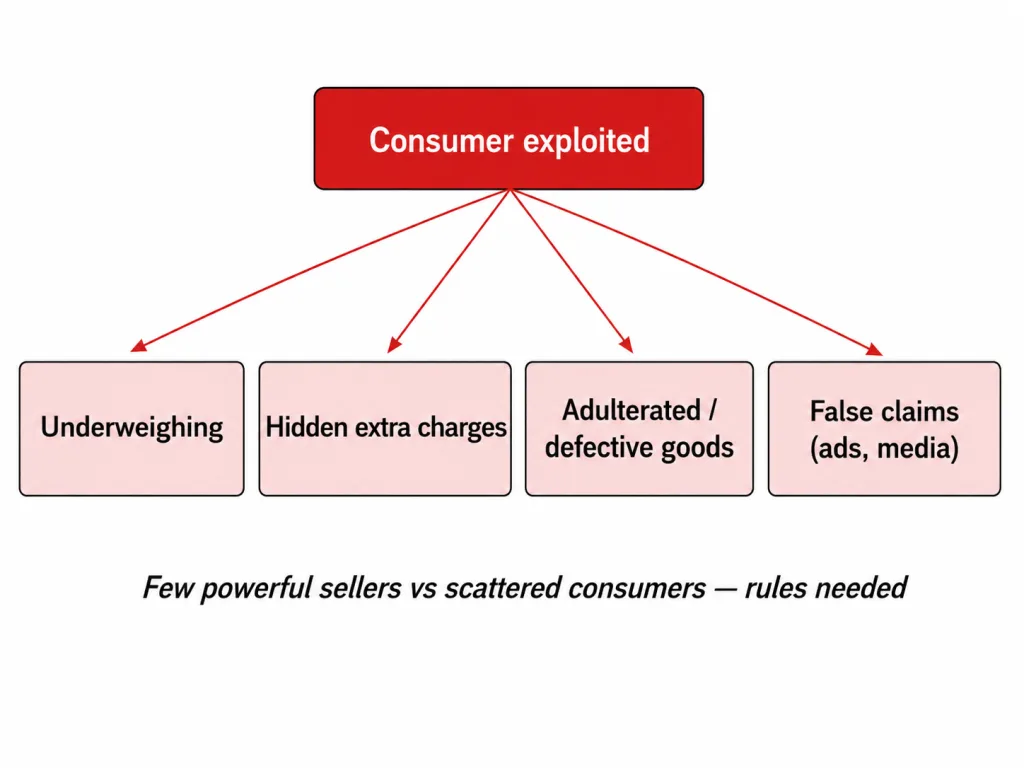
- Unfair trade practices — shopkeepers weighing less than they should, adding charges not mentioned earlier, or selling adulterated or defective goods.
- Few, powerful producers vs scattered consumers — markets do not work fairly when a few large companies with huge wealth and reach face consumers who buy in small amounts and are scattered. Such companies can manipulate the market.
- False information through the media — for example, a company for years sold powder milk for babies worldwide, falsely claiming it was better than mother's milk, and it took years of struggle to force it to admit the false claim. Likewise, a long court battle was needed to make cigarette companies accept that their product could cause cancer.
Because of all this, there is a clear need for rules and regulations to protect consumers.
Questions and Answers
Q1. Why are rules and regulations required in the marketplace? Illustrate.
Answer: Rules and regulations are required because the individual consumer is in a weak position and can be exploited by sellers. For example, shopkeepers may weigh less than they should, add hidden charges, or sell adulterated goods; large companies may spread false information (like the powder-milk and cigarette cases). Without rules, sellers shift all responsibility onto buyers. Rules and regulations protect consumers and make markets work more fairly.
Q2. Mention a few factors that cause the exploitation of consumers.
Answer: Consumers are exploited because of: (i) unfair trade practices such as underweighing, hidden charges and adulteration; (ii) the imbalance of power when few large producers face scattered consumers buying in small amounts; (iii) false or misleading information spread through advertising and the media; and (iv) limited consumer awareness of their rights. These factors leave individual consumers in a weak, vulnerable position.
Q3. How can large companies manipulate the market against consumers? Give an example.
Answer: Large companies with huge wealth, power and reach can manipulate the market, especially when consumers are scattered and buy in small amounts. A common method is spreading false information through the media. For example, a company sold baby powder-milk worldwide, falsely claiming it was better than mother's milk, and it took years of struggle to force it to admit the false claim. This shows why consumers need protection.