
Consumer Rights — An Overview
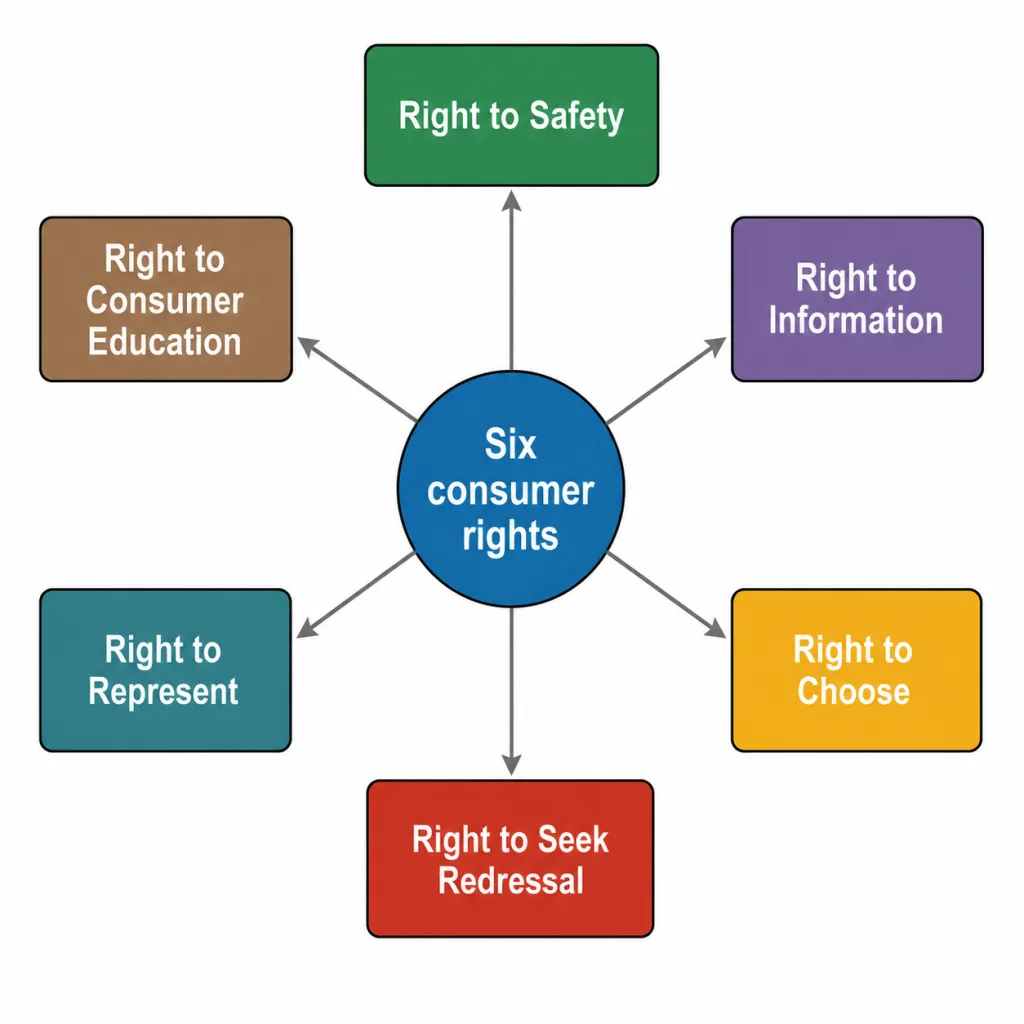
The Consumer Protection Act guarantees Indian consumers six important rights:
- Right to Safety
- Right to Information
- Right to Choose
- Right to Seek Redressal
- Right to Represent (be heard)
- Right to Consumer Education
These rights let consumers get a fair deal and protect themselves against exploitation. We begin with the Right to Safety.
The Right to Safety
While using goods and services, consumers have the right to be protected against the marketing of goods and the delivery of services that are hazardous to life and property.
Reji's suffering shows why. Reji Mathew, a healthy Class IX boy, was admitted to a private clinic in Kerala for removal of tonsils. Due to improper anaesthesia, he suffered brain abnormalities and was crippled for life. His father claimed Rs 5,00,000 compensation. The State Commission dismissed the case for insufficient evidence, but on appeal the National Commission held the hospital responsible for medical negligence and directed it to pay the compensation.
Many goods need special safety attention — for example, a pressure cooker's safety valve, if defective, can cause a serious accident, so manufacturers must ensure high quality, backed by government supervision.
Questions and Answers
Q1. Name the six rights of consumers under the Consumer Protection Act.
Answer: The six consumer rights are: (i) the Right to Safety; (ii) the Right to Information; (iii) the Right to Choose; (iv) the Right to Seek Redressal; (v) the Right to Represent (to be heard); and (vi) the Right to Consumer Education. Together they protect consumers from exploitation and help them get a fair deal in the market.
Q2. What is the Right to Safety? Explain with the case of Reji.
Answer: The Right to Safety means consumers have the right to be protected against goods and services that are hazardous to life and property. In Reji's case, a Class IX boy was crippled for life due to improper anaesthesia during a tonsil operation. Though the State Commission dismissed the case, the National Commission held the hospital responsible for medical negligence and ordered compensation. It shows that producers must strictly follow safety rules to protect consumers.
Q3. Why is the Right to Safety especially important for certain goods? Give examples.
Answer: Some goods and services directly affect life and property, so their safety is critical. For example, a pressure cooker has a safety valve which, if defective, can cause a serious accident; an LPG cylinder, medicines, or a high-rise building can be dangerous if safety rules are ignored. Manufacturers must ensure high quality and strict safety standards, supported by government supervision, so that consumers are protected against hazards.