
Learning to Become Well-Informed Consumers
When consumers become conscious of their rights, they can make informed choices. The enactment of COPRA led to separate Departments of Consumer Affairs in the central and state governments, which spread information through posters and advertisements about the legal processes people can use.
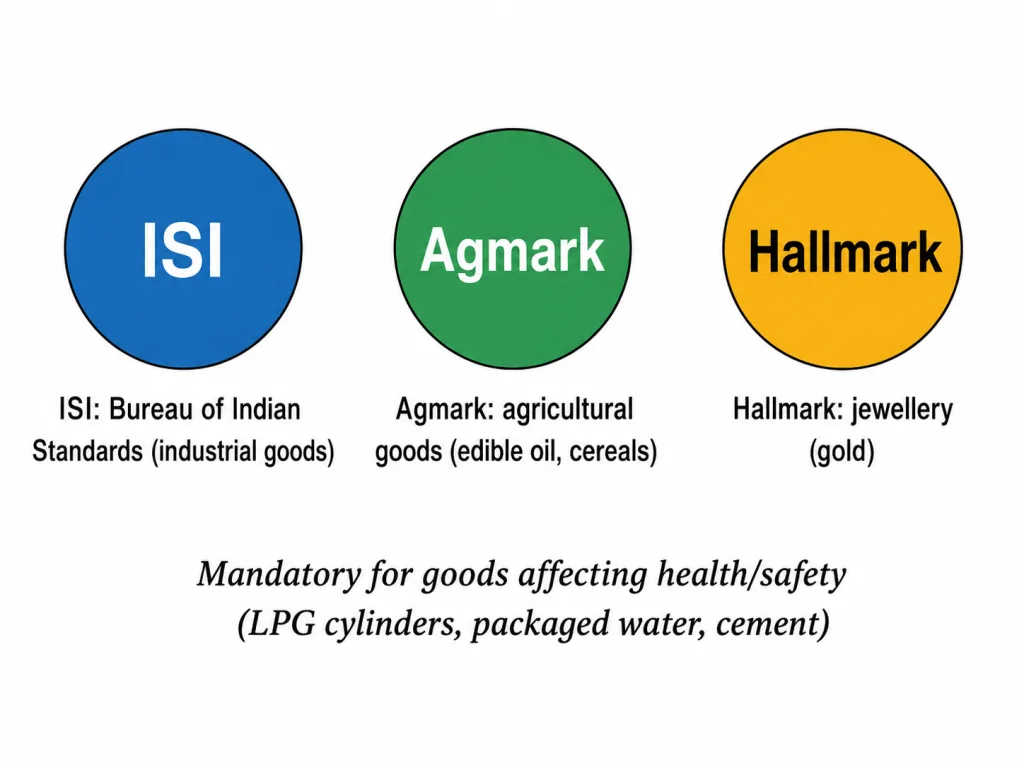
Standardisation logos help consumers judge quality. On many products you see ISI, Agmark, Hallmark or +F (FPO) marks. The organisations that issue these certificates allow producers to use their logos only if they follow certain quality standards. Though certification is not compulsory for all products, it is mandatory for goods affecting health and safety or of mass consumption — such as LPG cylinders, food colours and additives, cement and packaged drinking water. (ISI/Bureau of Indian Standards covers industrial goods, Agmark covers agricultural goods like edible oil and cereals, and Hallmark certifies jewellery.)
Taking the Consumer Movement Forward
India observes 24 December as National Consumers' Day — the day the Consumer Protection Act was enacted in 1986. India is one of the few countries with an exclusive authority for consumer redressal.
The movement has grown to more than 2,000 consumer groups, though only about 50–60 are well organised and recognised. Challenges remain: redressal is often cumbersome, expensive and time-consuming, cash memos are frequently not issued (so evidence is hard to gather), and enforcement of laws is weak. COPRA was amended in 2019 to strengthen consumers further — internet buying is now covered, a deficient service provider or manufacturer can be penalised or imprisoned, and disputes can be settled through a neutral mediator outside the commission. Ultimately, the consumer movement can be effective only with consumers' active, voluntary involvement.
Questions and Answers
Q1. What do standardisation logos like ISI, Agmark and Hallmark tell a consumer?
Answer: Logos like ISI, Agmark, Hallmark and +F tell a consumer that the product meets certain quality standards set by the issuing organisation. Producers may use these logos only if they follow those standards, so the marks assure quality. ISI (Bureau of Indian Standards) covers industrial goods, Agmark covers agricultural products such as edible oil and cereals, and Hallmark certifies jewellery (gold). Certification is mandatory for products affecting health and safety, like LPG cylinders and packaged drinking water.
Q2. What is National Consumers' Day? What does COPRA's 2019 amendment add?
Answer: National Consumers' Day is observed on 24 December, the day the Consumer Protection Act was enacted in 1986. The 2019 amendment to COPRA strengthened consumer protection: it includes buying through the internet, holds a deficient service provider or manufacturer responsible (with penalties or even imprisonment), and allows disputes to be settled through a neutral mediator outside the commission - making redressal quicker.
Q3. Critically examine the progress of the consumer movement in India.
Answer: The consumer movement has progressed — there are now over 2,000 consumer groups, an exclusive redressal system under COPRA, National Consumers' Day, and the strengthening 2019 amendment. However, progress is slow and uneven: only about 50–60 groups are well organised, redressal is cumbersome, expensive and time-consuming, cash memos are often not issued so evidence is hard to gather, and enforcement of consumer and worker-protection laws is weak. The movement can be effective only with consumers' active, voluntary participation.