
The Right to Seek Redressal
Consumers have the right to seek redressal against unfair trade practices and exploitation. If any damage is done to a consumer, she has the right to get compensation depending on the degree of the damage. For this, there must be an easy and effective public system of redressal.
Prakash's Case and Class Action
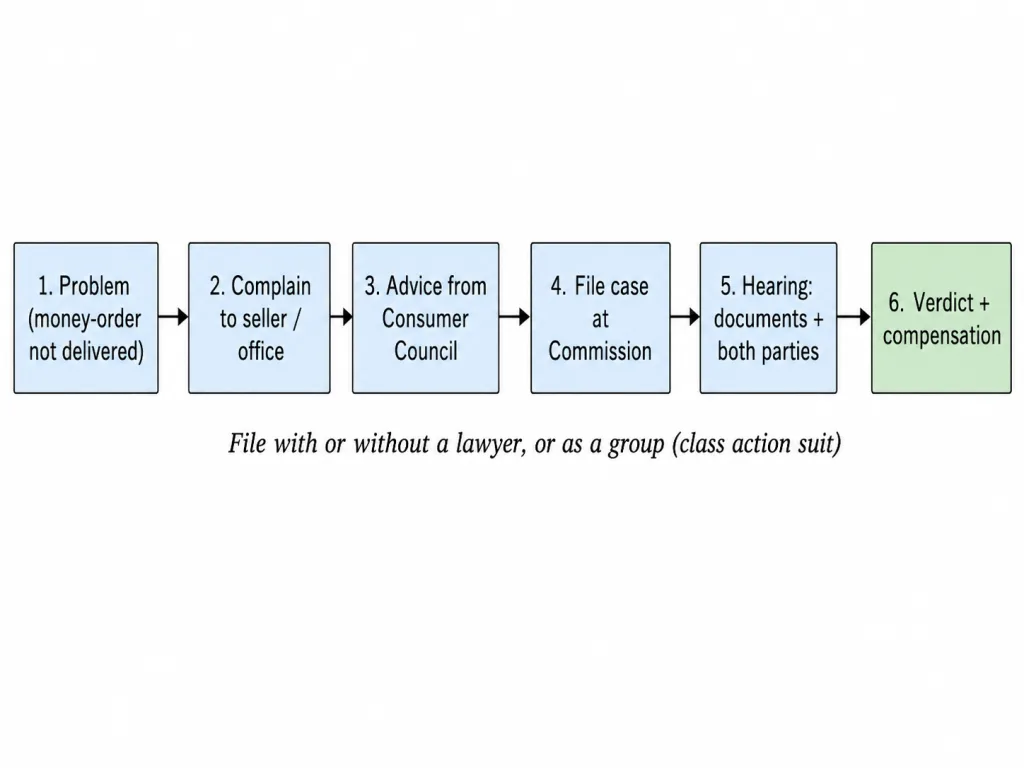
Prakash sent a money-order to his village for his daughter's marriage, but the money never reached her — not on time, nor months later. He filed a case in the District Consumer Disputes Redressal Commission in New Delhi: he first complained to the post office, then sought advice from the local Consumer Protection Council, then filed a registration form at the Commission, which sent a notice to the other party; he pleaded his own case, the judge verified documents and heard both parties, and finally announced the verdict.
A consumer can file a complaint on his or her own, with or without a lawyer. These days, consumers, individually or as a group (a class action suit), can file complaints physically or through the internet and conduct cases through video conferencing — making redressal easier.
Questions and Answers
Q1. What is the Right to Seek Redressal?
Answer: The Right to Seek Redressal is the consumer's right to seek a remedy against unfair trade practices and exploitation. If a consumer suffers damage from a defective good or deficient service, she has the right to get compensation according to the degree of the damage. This right requires an easy and effective public system — the consumer courts — through which complaints can be made and settled.
Q2. Describe how a consumer like Prakash gets redressal.
Answer: Prakash sent a money-order that never reached his daughter. He first complained to the post office; when it did not respond satisfactorily, he sought advice from the local Consumer Protection Council, then filed a case in the District Consumer Disputes Redressal Commission by submitting a registration form. The Commission sent a notice to the post office; Prakash pleaded his own case; the judge verified the documents, heard both sides, and announced the verdict. He got redressal without needing a lawyer.
Q3. What is a class action suit? How has technology made redressal easier?
Answer: A class action suit is a complaint filed by a group of consumers together (rather than one individual) against the same unfair practice. Technology has made redressal easier because consumers can now file complaints through the internet as well as physically, and conduct their cases through video conferencing, so they need not always travel to the commission. A consumer can also file with or without a lawyer.