
The Right to Choose
Any consumer who receives a service, regardless of age, gender or the nature of the service, has the right to choose whether to continue to receive it. Sellers cannot force consumers into purchases they do not want.
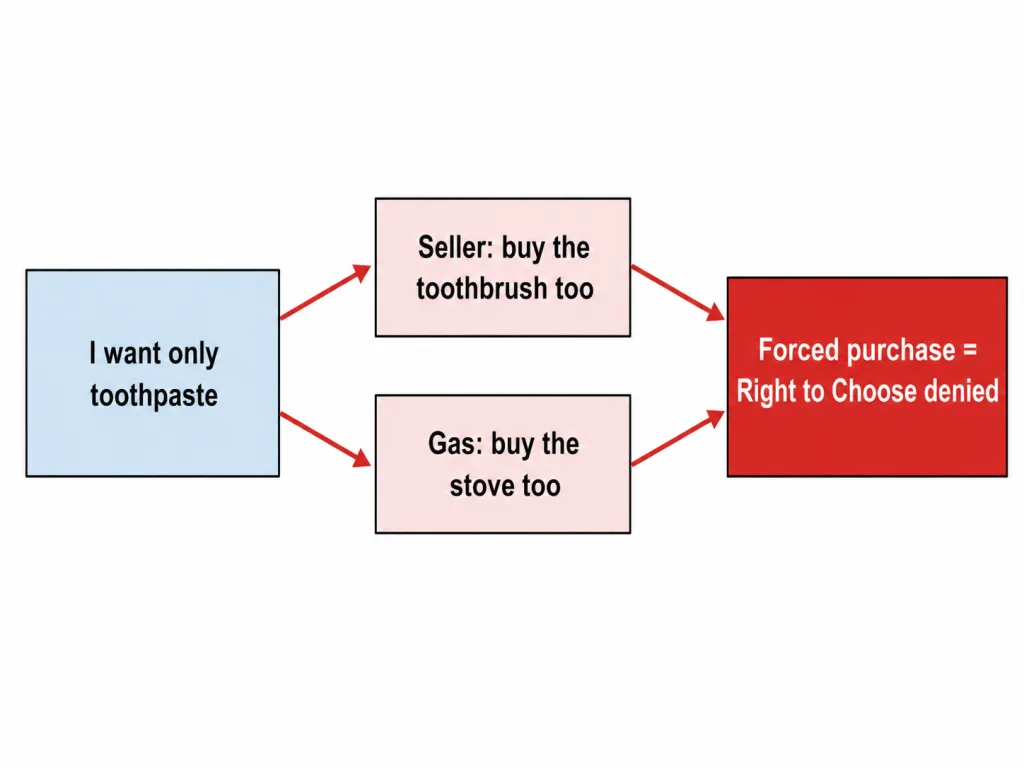
Tie-in sales deny this right. For example, if you want toothpaste but the shopkeeper insists you can buy it only with a toothbrush, your right to choose is denied. Similarly, a gas dealer may insist you buy a stove with a new connection. In such ways consumers are forced to buy things they do not wish to.
Abirami's Refund — the Right to Choose in Action
Abirami joined a two-year professional course in New Delhi and paid the entire fee of Rs 61,020 as a lump sum in advance. After one year she opted out because the teaching quality was poor, but her refund was denied.
She filed a case in the District Consumer Disputes Redressal Commission, which directed the institute to refund Rs 28,000, saying she had the right to choose. The institute appealed; the State Commission upheld the order, fined the institute Rs 25,000 for a frivolous appeal, awarded Rs 7,000 compensation and costs, and restrained all institutions in the state from charging full-course fees in advance. This shows that a consumer has the right to choose whether to continue a service.
Questions and Answers
Q1. What is the Right to Choose? Explain with an example.
Answer: The Right to Choose means any consumer who receives a service — regardless of age, gender or nature of service — has the right to decide whether to continue it, and cannot be forced into unwanted purchases. For example, if a shopkeeper sells toothpaste only along with a toothbrush, or a gas dealer forces you to buy a stove with a new connection, your right to choose is denied. Consumers are entitled to buy only what they want.
Q2. How does Abirami's case illustrate the Right to Choose?
Answer: Abirami paid the full Rs 61,020 fee for a two-year course but left after one year due to poor teaching; her refund was refused. The District Commission ordered a refund of Rs 28,000, upholding her right to choose whether to continue the service. On the institute's appeal, the State Commission upheld the order, fined the institute Rs 25,000 for a frivolous appeal, awarded compensation, and barred institutes from taking full fees in advance. This shows a consumer's right to choose whether to continue a service.
Q3. What are 'tie-in sales', and how do they deny the Right to Choose?
Answer: Tie-in sales are cases where a seller forces the consumer to buy one product only along with another. For example, selling toothpaste only with a toothbrush, or requiring a customer to buy a stove to get a new gas connection. Such practices deny the consumer's Right to Choose, because the consumer is compelled to buy things they do not wish to, instead of freely choosing only what they need.