
Industrial Pollution — Air and Water
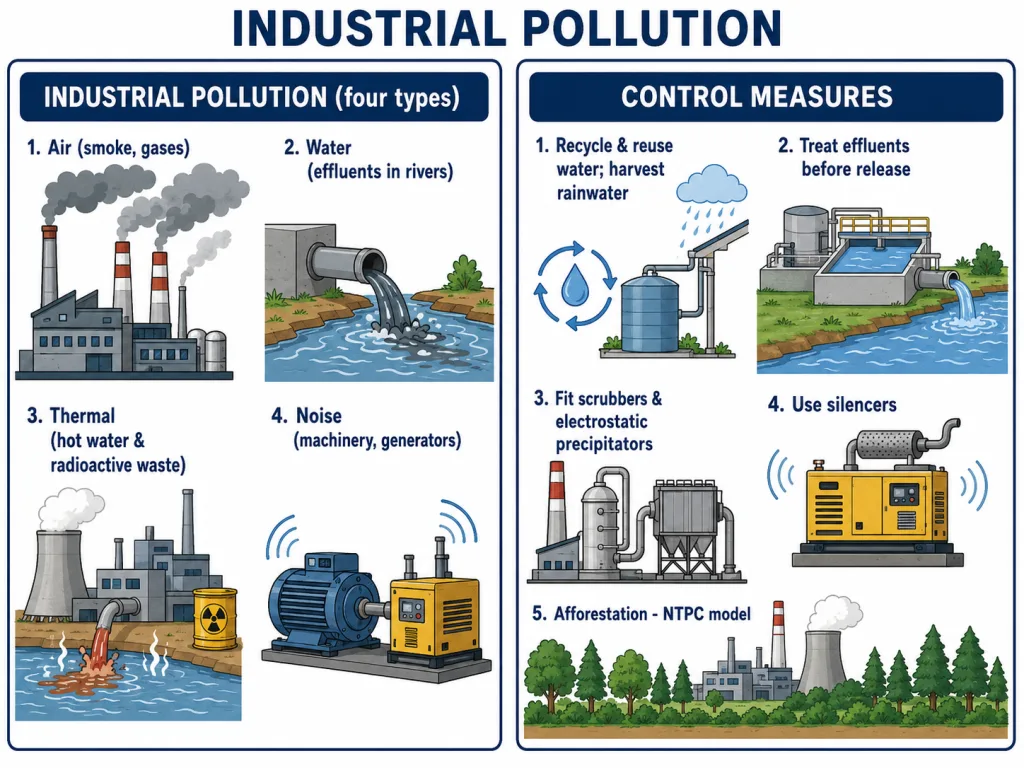
Industries contribute to growth, but they also cause serious pollution and environmental degradation. Industries (including thermal power plants) are responsible for four types of pollution: air, water, land and noise.
- Air pollution is caused by high proportions of undesirable gases such as sulphur dioxide and carbon monoxide, and by particulate matter (dust, mist and smoke) from chemical and paper factories, brick kilns, refineries and smelting plants. Toxic gas leaks (like the Bhopal Gas Tragedy) can be very hazardous.
- Water pollution is caused by organic and inorganic industrial wastes and effluents discharged into rivers by paper, chemical, textile, dyeing, refinery, tannery and electroplating industries — releasing dyes, acids, salts and heavy metals like lead and mercury. Fly ash, phospho-gypsum and iron-and-steel slags are the major solid wastes.
Thermal, Land and Noise Pollution
- Thermal pollution of water occurs when hot water from factories and thermal plants is drained into rivers and ponds before cooling, harming aquatic life. Wastes from nuclear power plants can cause cancers, birth defects and miscarriages.
- Land pollution is caused by dumping wastes — glass, harmful chemicals, industrial effluents, packaging and garbage — which renders the soil useless. Rain water carries these pollutants down, contaminating groundwater too.
- Noise pollution causes irritation and anger, and can lead to hearing impairment, increased heart rate and blood pressure. It comes from industrial and construction activities, machinery and generators.
Controlling Environmental Degradation
Several measures can reduce industrial pollution:
- Minimise water use by reusing and recycling it in two or more successive stages, and harvest rainwater to meet water needs.
- Treat hot water and effluents before releasing them — through primary (mechanical), secondary (biological) and tertiary (advanced) treatment.
- Reduce air pollution by fitting factory chimneys with smokestacks, fabric filters, scrubbers, inertial separators and electrostatic precipitators to remove particulate matter.
- Reduce noise by fitting machinery and generators with silencers.
NTPC shows the way: The National Thermal Power Corporation (NTPC) is a model of environmental management — it makes optimum use of equipment, manages ash ponds, carries out ecological monitoring and afforestation, and runs a water-recycling and waste-management system.
Key Point: Industry and the environment can go together if pollution is treated, water is recycled, and clean technology and afforestation are adopted.
Questions and Answers
Q1. Name the four types of pollution caused by industries.
Answer: Industries (including thermal power plants) cause four types of pollution: air pollution, water pollution, land pollution and noise pollution. (Thermal pollution of water is a form of water pollution.)
Q2. How is water polluted by industries, and what are the major solid wastes?
Answer: Water is polluted by organic and inorganic industrial wastes and effluents discharged into rivers — dyes, acids, salts and heavy metals like lead and mercury — mainly from paper, chemical, textile, refinery, tannery and electroplating industries. The major solid wastes are fly ash, phospho-gypsum and iron-and-steel slags.
Q3. What is thermal pollution, and how does it affect the environment?
Answer: Thermal pollution occurs when hot water from factories and thermal plants is drained into rivers and ponds before it is cooled. The sudden rise in water temperature harms aquatic life (fish and other organisms), disturbing the ecological balance of the water body.
Q4. Suggest measures to control industrial pollution.
Answer: Pollution can be controlled by reusing and recycling water in successive stages, harvesting rainwater, and treating hot water and effluents before release. Air pollution can be reduced with scrubbers, fabric filters and electrostatic precipitators, and noise with silencers. Afforestation and models like NTPC's environmental management also help.