
Nuclear (Atomic) Energy
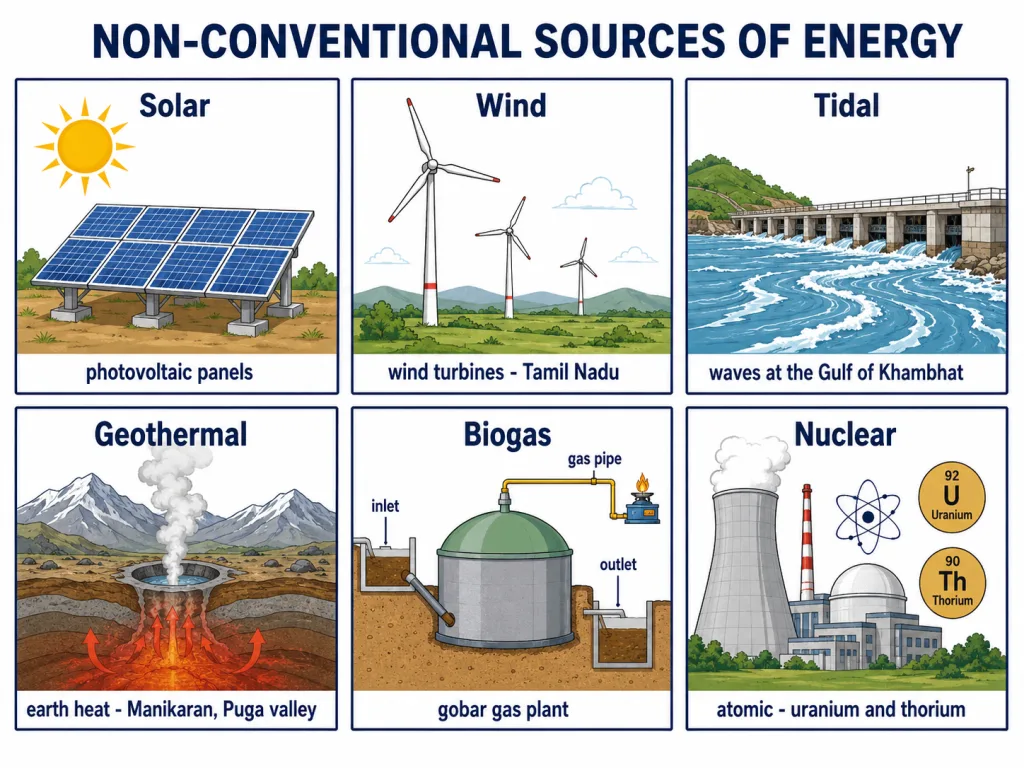
Nuclear or atomic energy is obtained by altering the structure of atoms — the energy released is used to generate electricity. The main minerals used are uranium and thorium, found in Jharkhand and the Aravalli ranges of Rajasthan. Thorium is also obtained from the monazite sands of Kerala.
Solar, Wind and Tidal Energy
- Solar energy — photovoltaic technology converts sunlight directly into electricity. India, being a tropical country, has enormous solar potential, so solar energy has a bright future; large solar power plants are being set up (for example in Gujarat).
- Wind energy — India has great potential for wind power. The largest wind-farm cluster is in Tamil Nadu, and Nagercoil and Jaisalmer are well known for effective use of wind energy.
- Tidal energy — the energy of ocean tides can turn turbines to make electricity. In India, the Gulf of Khambhat, the Gulf of Kutch and the Sunderbans are ideal sites for tidal energy.
Geothermal and Biogas Energy
- Geothermal energy — heat and electricity produced using the heat from the interior of the earth. Where the geothermal gradient is high, this heat can generate power. Two experimental projects have been set up in India: one in the Parvati valley near Manikaran (Himachal Pradesh) and the other in the Puga valley (Ladakh).
- Biogas — shrubs, farm waste, and animal and human waste are decomposed to produce biogas for domestic use. Biogas plants set up using cattle dung are known as 'gobar gas plants' in rural India. Biogas is the most efficient use of cattle dung and also improves the quality of manure.
Conservation of Energy
Energy is a basic requirement for economic development, but the sources — especially fossil fuels — are limited and their use pollutes the environment. So we must move towards a sustainable path of energy development.
Ways to conserve energy:
- Use public transport instead of individual vehicles, and switch off electricity when not in use.
- Use energy-efficient devices and power-saving equipment.
- Increase the use of renewable (non-conventional) sources such as solar, wind and biogas.
Key Point: The way forward is to conserve energy and shift to renewable sources for a clean and secure future.
Questions and Answers
Q1. Which minerals are used to produce nuclear energy, and where are they found?
Answer: Nuclear (atomic) energy uses uranium and thorium. In India, these are found in Jharkhand and the Aravalli ranges of Rajasthan, and thorium is also obtained from the monazite sands of Kerala.
Q2. Why does solar energy have a bright future in India?
Answer: India is a tropical country that receives abundant sunshine throughout the year. Photovoltaic technology can convert this sunlight directly into electricity, so solar energy has a bright future; it is clean, renewable, and helps reduce dependence on firewood and dung cakes in rural areas.
Q3. Name two ideal sites for tidal energy and two for wind energy in India.
Answer: Tidal energy: the Gulf of Khambhat and the Gulf of Kutch (also the Sunderbans). Wind energy: Nagercoil and Jaisalmer (the largest wind-farm cluster is in Tamil Nadu).
Q4. What is biogas, and why is it efficient?
Answer: Biogas is produced by the decomposition of shrubs, farm waste, and animal and human waste. Plants using cattle dung are called 'gobar gas plants' in rural India. Biogas is the most efficient use of cattle dung — it provides clean fuel and also improves the quality of the manure left behind, unlike burning dung cakes.
Q5. Suggest ways to conserve energy.
Answer: We can conserve energy by using public transport, switching off lights and appliances when not needed, using energy-efficient devices, and increasing the use of renewable (non-conventional) sources such as solar, wind and biogas. This reduces the strain on limited fossil fuels and lowers pollution.