
The Many Uses of Multi-Purpose Projects
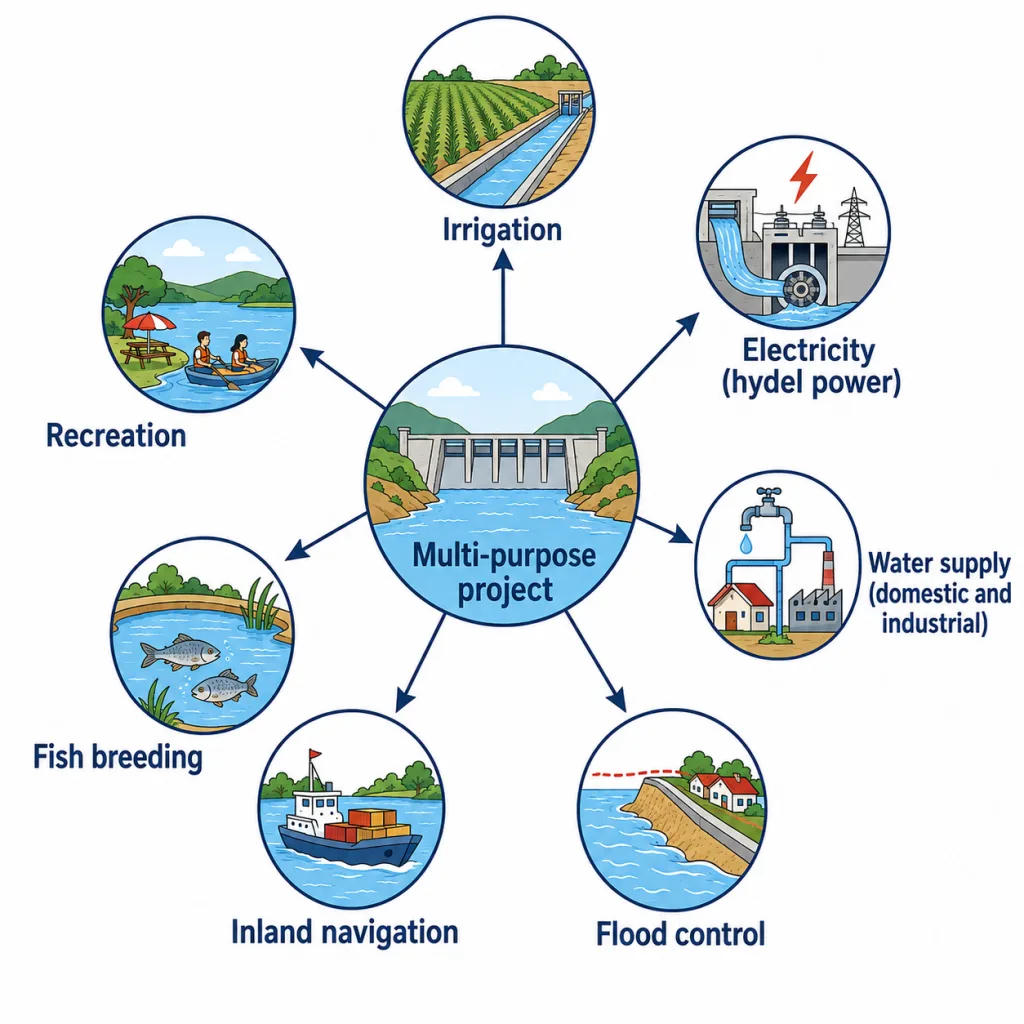
A multi-purpose project is valuable because a single dam and reservoir can serve many needs at once. The main integrated uses are:
- Irrigation — stored water is carried through canals to irrigate farmland, especially in dry seasons.
- Electricity (hydel power) — falling water turns turbines to generate hydroelectric power.
- Water supply — for domestic (household) and industrial use.
- Flood control — the reservoir holds back excess water during heavy rains.
- Inland navigation — stored water keeps rivers and canals navigable for boats.
- Fish breeding (pisciculture) — reservoirs are used to breed fish.
- Recreation — reservoirs support tourism and water sports.
Engines of National Development
After Independence, multi-purpose projects were seen as engines of development. By providing irrigation and power, they were meant to:
- Boost agriculture and the village economy, and
- Drive industrialisation and the growth of towns and cities.
Providing assured irrigation can even turn drought-prone areas 'drought-proof'. For example, the Sardar Sarovar Project on the Narmada aims to bring water to drought-prone and desert areas across four states, irrigating lakhs of hectares of otherwise dry land.
Key Point: The great appeal of multi-purpose projects is that one project can deliver water, food, power and flood protection together.
Questions and Answers
Q1. List the main uses of a multi-purpose river project.
Answer: A multi-purpose project provides irrigation, electricity (hydel power), water supply for domestic and industrial use, flood control, inland navigation, fish breeding and recreation — all integrated in one project.
Q2. How do multi-purpose projects help national development?
Answer: By supplying irrigation and hydroelectric power, multi-purpose projects boost agriculture and the village economy and drive industrialisation and urban growth. Assured irrigation can make drought-prone areas 'drought-proof'. This is why, after Independence, they were seen as vehicles of national development.
Q3. How can a multi-purpose project make a drought-prone region 'drought-proof'?
Answer: By storing water and carrying it through canals, a multi-purpose project provides an assured supply of water for irrigation and domestic use even in dry seasons. For example, the Sardar Sarovar Project aims to bring Narmada water to drought-prone and desert districts, turning otherwise dry land into productive, irrigated 'drought-proof' areas.