
Biodegradable and Non-biodegradable Substances
Our daily activities generate a lot of waste. Based on whether living organisms can break them down, waste materials are of two kinds:
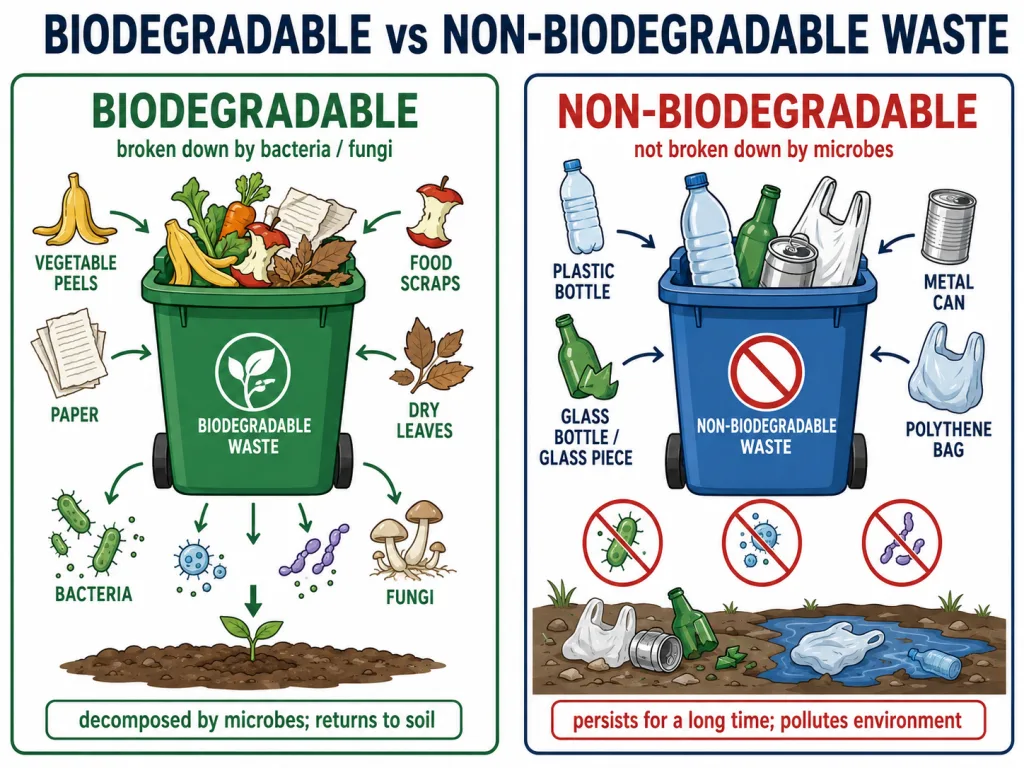
- Biodegradable substances - those that can be broken down into simpler substances by biological processes (the action of bacteria, fungi and other decomposers). Examples: vegetable and fruit peels, paper, cotton cloth, food waste, leaves, wood, cow dung.
- Non-biodegradable substances - those that cannot be broken down by biological processes. Examples: plastics, glass, metals, DDT, polythene bags. They may persist in the environment for a very long time.
Why Some Waste Is Not Broken Down
Decomposition happens through enzymes, and enzymes are specific - a given enzyme can break down only a particular substance. Microorganisms have enzymes to break down natural materials, but not man-made materials like plastics.
That is why plastics and similar materials are not broken down by bacteria or saprophytes. They may be changed slowly by physical processes like heat and pressure, but under ordinary environmental conditions they persist for a very long time.
Key Point: Biodegradable = broken down by microbes (natural materials). Non-biodegradable = not broken down (plastics, glass, metals).
Problems of Waste and Environment-Friendly Practices
Problems caused by non-biodegradable waste:
- It accumulates and persists in the environment for years, causing litter and pollution of soil and water.
- It can harm animals that swallow it and can choke drains and water bodies.
- Non-degradable chemicals (like pesticides) enter food chains and cause biological magnification.
Even biodegradable waste, if not managed, can cause problems - it produces foul smells and can spread disease as it rots, and can pollute water.
Environment-friendly practices (how you can help):
- Segregate waste into biodegradable and non-biodegradable at source.
- Reduce, reuse and recycle - carry cloth bags for shopping, avoid disposable plastics.
- Compost biodegradable kitchen and garden waste.
- Switch off unnecessary lights and fans; walk or cycle for short distances.
[Exam Tip] Grass, paper, food peels = biodegradable; plastic, glass, metal = non-biodegradable. The 3 R's - Reduce, Reuse, Recycle - are the key to waste management.
Solved Examples
Example 1: Why biodegradable and non-biodegradable? (NCERT)
Why are some substances biodegradable and some non-biodegradable?
Solution: Decomposition is done by enzymes, which are specific - each enzyme acts only on a particular substance. Microorganisms have enzymes to break down natural materials (biodegradable), but not man-made materials like plastics, which therefore remain non-biodegradable.
Example 2: Effects of biodegradable waste (NCERT)
Give two ways in which biodegradable substances affect the environment.
Solution: (i) As they rot, biodegradable wastes produce foul smells and can spread disease (they attract flies and microbes). (ii) Their decomposition can pollute water and use up oxygen in water bodies, harming aquatic life.
Example 3: Effects of non-biodegradable waste (NCERT)
Give two ways in which non-biodegradable substances affect the environment.
Solution: (i) They persist for a long time and pollute soil and water, harming plants, animals and the ecosystem. (ii) Non-degradable chemicals enter food chains and undergo biological magnification, reaching harmful levels in top consumers like humans.
Example 4: How can you help reduce waste? (NCERT)
Give two methods to help reduce the problem of waste disposal.
Solution: (i) Segregate waste and compost/recycle it - separate biodegradable and non-biodegradable waste. (ii) Reduce and reuse - carry cloth bags, avoid single-use plastics, and reuse items instead of throwing them away.