
Phylum Porifera - the Sponges
General characters
- Commonly known as sponges.
- Generally marine and mostly asymmetrical.
- Primitive multicellular animals with cellular level of organisation.
The water transport or canal system - the structure the phylum is named for, and the most examined thing in it:
Water enters through minute pores (ostia) in the body wall into a central cavity, spongocoel, from where it goes out through the osculum.
And what that current is for:
This pathway of water transport is helpful in food gathering, respiratory exchange and removal of waste.
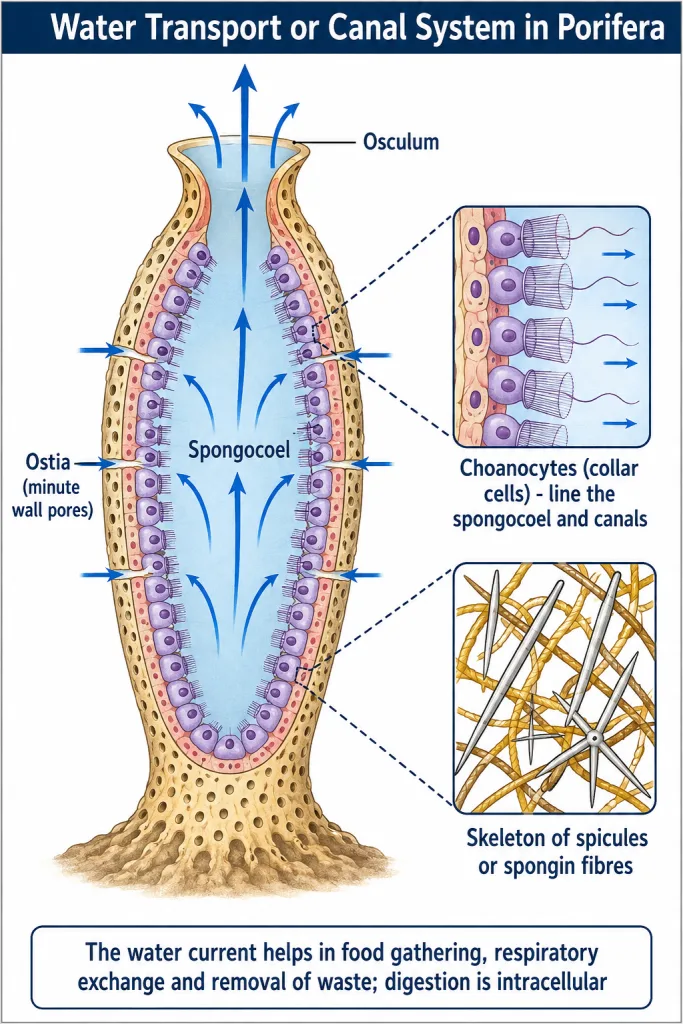
[NEET Important] Three structures in strict order: ostia (in) to spongocoel (central cavity) to osculum (out). Reversing ostia and osculum is the single most common error on this phylum.
Porifera - Cells, Skeleton and Reproduction
Choanocytes
Choanocytes or collar cells line the spongocoel and the canals.
Digestion
Digestion is intracellular.
Skeleton
The body is supported by a skeleton made up of spicules or spongin fibres.
Reproduction
- Sexes are not separate (hermaphrodite) - eggs and sperms are produced by the same individual.
- Sponges reproduce asexually by fragmentation and sexually by formation of gametes.
- Fertilisation is internal.
- Development is indirect, having a larval stage which is morphologically distinct from the adult.
Examples: Sycon (Scypha), Spongilla (fresh water sponge) and Euspongia (bath sponge).
[NEET Important] Spongilla is the fresh water sponge - worth flagging because sponges are otherwise described as generally marine. And choanocyte = collar cell is a one-word answer that appears in match-the-column items constantly.
Phylum Coelenterata (Cnidaria) - General Characters
- Aquatic, mostly marine, sessile or free-swimming, radially symmetrical.
- Tissue level of organisation and diploblastic.
- A central gastro-vascular cavity with a single opening, mouth on hypostome.
- Digestion is extracellular and intracellular - both.
- Some cnidarians, e.g. corals, have a skeleton composed of calcium carbonate.
The cnidoblast - where the name comes from
The name cnidaria is derived from the cnidoblasts or cnidocytes (which contain the stinging capsules or nematocysts) present on the tentacles and the body.
And their three uses:
Cnidoblasts are used for anchorage, defense and for the capture of prey.
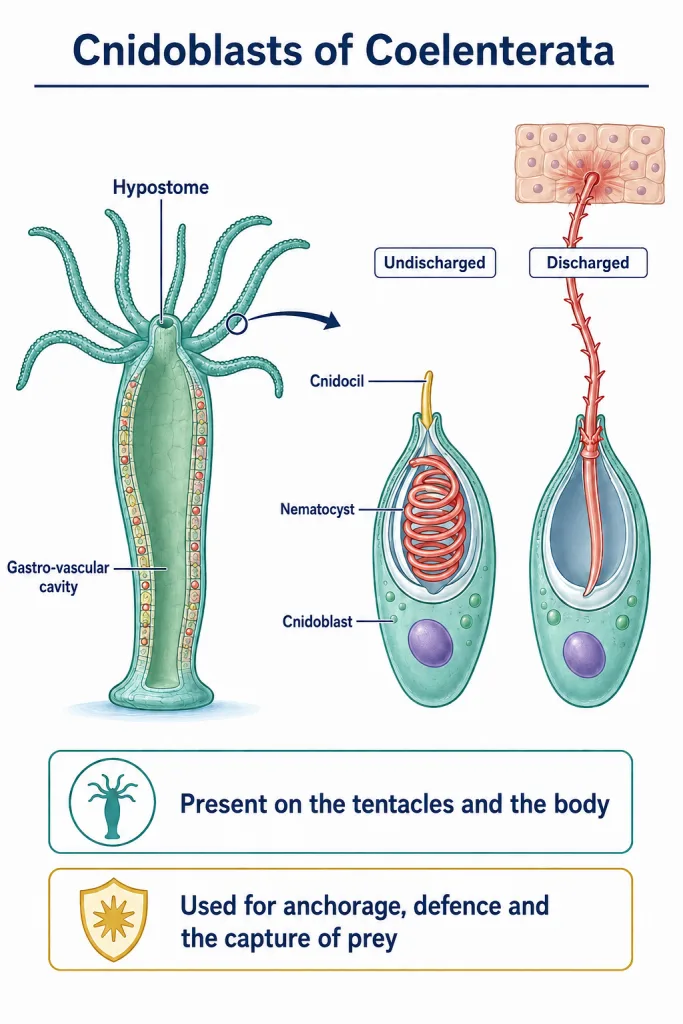
[NEET Important] Keep the nesting straight: the cnidoblast (or cnidocyte) is the cell; the nematocyst is the stinging capsule inside it. Options that swap the two are testing exactly this.
Polyp, Medusa and Metagenesis
Cnidarians exhibit two basic body forms called polyp and medusa.
| Form | Description | Examples |
|---|---|---|
| Polyp | Sessile and cylindrical | Hydra, Adamsia |
| Medusa | Umbrella-shaped and free-swimming | Aurelia (jelly fish) |
And the alternation between them:
Those cnidarians which exist in both forms exhibit alternation of generations (Metagenesis) - polyps produce medusae asexually and medusae form the polyps sexually (e.g. Obelia).
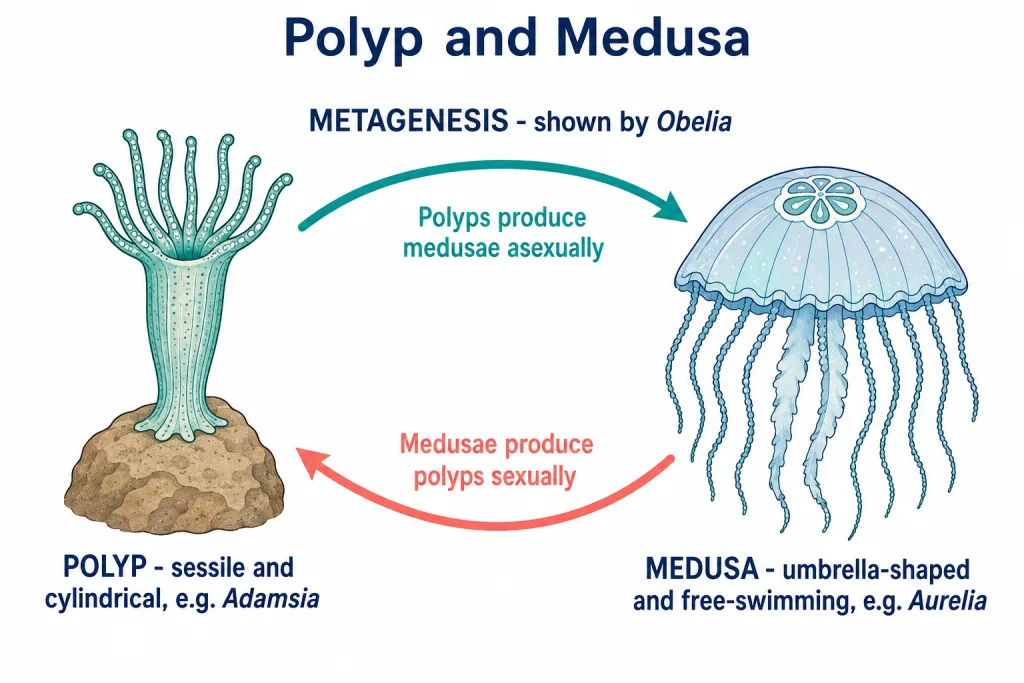
[NEET Important] The direction matters and is asked directly: polyps produce medusae ASEXUALLY, and medusae form polyps SEXUALLY. Reversed options are standard. The example is Obelia.
Examples of the phylum: Physalia (Portuguese man-of-war), Adamsia (sea anemone), Pennatula (sea-pen), Gorgonia (sea-fan) and Meandrina (brain coral).
Porifera and Coelenterata Compared
| Porifera | Coelenterata | |
|---|---|---|
| Common name | Sponges | Cnidarians |
| Level of organisation | Cellular | Tissue |
| Symmetry | Mostly asymmetrical | Radial |
| Germ layers | - | Diploblastic |
| Body cavity | Spongocoel (not a coelom) | Gastro-vascular cavity, single opening on the hypostome |
| Digestion | Intracellular | Extracellular and intracellular |
| Distinctive cell / structure | Choanocytes (collar cells); ostia, spongocoel, osculum | Cnidoblasts with nematocysts |
| Skeleton | Spicules or spongin fibres | Calcium carbonate in corals |
| Sexes | Not separate (hermaphrodite) | - |
| Fertilisation | Internal | - |
| Development | Indirect, larva distinct from adult | - |
| Body forms | - | Polyp and medusa; metagenesis in forms with both |
| Examples | Sycon, Spongilla, Euspongia | Physalia, Adamsia, Pennatula, Gorgonia, Meandrina, Aurelia, Hydra, Obelia |
Quick Recap
Porifera
- Sponges; generally marine, mostly asymmetrical, primitive multicellular with cellular level of organisation.
- Water canal system: water in through ostia, into the spongocoel, out through the osculum - serving food gathering, respiratory exchange and removal of waste.
- Choanocytes or collar cells line the spongocoel and canals; digestion intracellular.
- Skeleton of spicules or spongin fibres.
- Hermaphrodite - eggs and sperms from the same individual; asexual by fragmentation, sexual by gametes; internal fertilisation; indirect development with a larva morphologically distinct from the adult.
- Sycon, Spongilla (fresh water), Euspongia (bath sponge).
Coelenterata (Cnidaria)
- Aquatic, mostly marine, sessile or free-swimming, radially symmetrical, tissue level, diploblastic.
- Cnidoblasts / cnidocytes on tentacles and body contain nematocysts; used for anchorage, defense and capture of prey.
- Central gastro-vascular cavity with a single opening, mouth on the hypostome; digestion extracellular and intracellular.
- Corals have a calcium carbonate skeleton.
- Polyp - sessile, cylindrical (Hydra, Adamsia); medusa - umbrella-shaped, free-swimming (Aurelia).
- Metagenesis: polyps produce medusae asexually, medusae form polyps sexually (Obelia).
- Physalia, Adamsia, Pennatula, Gorgonia, Meandrina.
Solved Examples
Question 1
Q. Trace the path of water through a sponge.
Answer. Water enters through minute pores called ostia in the body wall, passes into the central cavity, the spongocoel, and goes out through the osculum.
Question 2
Q. What are choanocytes and where are they found?
Answer. Choanocytes or collar cells; they line the spongocoel and the canals of a sponge.
Question 3
Q. What supports the sponge body?
Answer. A skeleton made up of spicules or spongin fibres.
Question 4
Q. Name the fresh water sponge and the bath sponge.
Answer. Fresh water: Spongilla. Bath sponge: Euspongia.
Question 5
Q. What do cnidoblasts contain, and what are they used for?
Answer. They contain the stinging capsules or nematocysts, and are used for anchorage, defense and the capture of prey.
Question 6
Q. Name the two body forms of cnidarians.
Answer. The polyp - sessile and cylindrical - and the medusa - umbrella-shaped and free-swimming.
Question 7
Q. What is metagenesis? Give the example.
Answer. Metagenesis is what you get when cnidarians exist in both body forms and swap between them - the alternation of generations. Here polyps produce medusae asexually and medusae form the polyps sexually. Example: Obelia.
Question 8
Q. Describe reproduction in sponges.
Answer. Sexes are not separate - sponges are hermaphrodite, with eggs and sperms produced by the same individual. They reproduce asexually by fragmentation and sexually by the formation of gametes. Fertilisation is internal and development is indirect, so there is a larval stage morphologically distinct from the adult.
Question 9
Q. Distinguish intracellular from extracellular digestion, naming a group for each.
Answer.
- Intracellular digestion takes place inside the cells, food being engulfed and broken down within individual cells - as in Porifera.
- Extracellular digestion takes place outside the cells, in a cavity, with the products then absorbed - as in the gastro-vascular cavity of coelenterates.
Coelenterates and ctenophores show both: digestion is extracellular and intracellular.
Takeaway: This is one of the chapter-end exercises. Naming a group for each half is what completes the answer.
Question 10
Q. An aquatic animal is radially symmetrical, diploblastic, has a single body opening on a hypostome, and bears stinging cells on its tentacles. Name the phylum and the stinging cell.
Answer. Phylum Coelenterata (Cnidaria). The stinging cell is the cnidoblast (or cnidocyte), which contains the stinging capsule, the nematocyst.
Every clue fits: radial symmetry, diploblastic organisation, a central gastro-vascular cavity with a single opening, mouth on hypostome, and cnidoblasts on the tentacles and body.
Question 11
Q. Sponges are multicellular yet have only cellular level of organisation. Explain what that means and how the canal system compensates.
Answer. Cellular level means the cells sit as loose cell aggregates with only some division of labour. They never form tissues, so there is no organised layer doing digestion, circulation or gas exchange.
The water transport or canal system stands in for those missing systems. Water comes in through the ostia, into the spongocoel, and out through the osculum, and that one current does three jobs at once - food gathering, respiratory exchange and removal of waste. It works because the outside water is brought right up to the individual cells, so nothing has to be moved around inside the body. The choanocytes lining the spongocoel and canals grab food particles out of that current, and digestion is intracellular because there is no gut cavity where extracellular digestion could happen.
Takeaway: The canal system is not just a structure to name - it is the functional answer to having no tissues.
Question 12
Q. Compare digestion in Porifera and Coelenterata and relate the difference to their levels of organisation.
Answer.
- In Porifera, digestion is intracellular only. With a cellular level of organisation there is no gut - just the spongocoel that water flows through - so food particles have to be taken into individual cells, and the choanocytes lining the canals do that job.
- In Coelenterata, digestion is extracellular and intracellular. The tissue level of organisation allows a central gastro-vascular cavity, and enzymes can be secreted into it. So bigger prey caught by the cnidoblasts gets broken down outside the cells first, then the products are taken up and digestion is finished inside the cells.
So the advance from cellular to tissue level buys a digestive cavity, and a cavity is what makes extracellular digestion possible in the first place.
Question 13
Q. Hydra, Aurelia and Obelia all belong to one phylum. What does each illustrate?
Answer.
- Hydra illustrates the polyp - the sessile and cylindrical body form.
- Aurelia, the jelly fish, illustrates the medusa - the umbrella-shaped and free-swimming form.
- Obelia illustrates metagenesis, because it exists in both forms: its polyps produce medusae asexually and its medusae form polyps sexually.
All three are radially symmetrical, diploblastic, tissue-level cnidarians with cnidoblasts and a gastro-vascular cavity. They share the phylum characters; what differs is which body form each one shows off.